
Management and Leadership Articles – Blog Categories
Quick Summary
- APM certification (PFQ, PMQ, PPQ) is the UK’s benchmark for project management excellence
- it significantly enhances professional credibility and boosts career prospects by providing structured knowledge and practical skills for complex project delivery
- choosing the right APM qualification depends on individual experience and career goals
- APM training prepares professionals for real-world project challenges and fosters a commitment to continuous improvement
Why is APM Certification a Must-Have for UK Project Professionals in 2026?
In the rapidly evolving business environment of 2026, APM certification is far more than a mere credential; it’s a strategic imperative for any project professional in the UK aiming for leadership and impactful project delivery. Employers across diverse sectors increasingly demand individuals who can not only manage tasks but also lead with vision, adeptly mitigate risks, and consistently deliver tangible value aligned with strategic objectives. APM qualifications provide a structured, industry-recognised pathway to cultivate these advanced capabilities, ensuring alignment with best practices and fostering a deep, practical understanding of the entire project lifecycle.
Key reasons why pursuing APM certification is indispensable for your career in 2026:
Standardised Excellence: The APM sets the national standard for project management in the UK, guaranteeing a consistent and high level of competence across the industry. This provides a clear, respected benchmark for professional development and assures employers of your foundational knowledge.
Enhanced Employability & Career Progression: Certified professionals demonstrably stand out in a competitive job market. Many leading organisations, particularly in high-growth sectors such as construction, IT, engineering, finance, and public services, either prioritise or explicitly require APM qualifications for critical project-related roles. This opens doors to more senior positions and increased earning potential.
Proven Skill Development & Practical Application: APM courses are meticulously designed to equip you with practical, transferable skills that are immediately applicable in real-world project scenarios. These include:
- Strategic Planning: Learning to align projects seamlessly with broader organisational goals and long-term vision.
- Risk Management: Developing robust strategies for identifying, assessing, mitigating, and responding to potential project risks (a skill enhanced by courses like LBTA’s “Effective Business Risk Management Strategies using ISO 31000 Framework“).
- Communication Essentials: Mastering effective stakeholder engagement, negotiation, and clear communication crucial for project success (complementing LBTA’s “High Impact Business Communication”).
- Leadership & Team Management: Building the ability to inspire, motivate, and guide project teams towards shared objectives.
- Resource Management: Optimising the allocation and utilisation of project resources, from personnel to budgets.
- Quality Management: Ensuring project deliverables meet specified standards and stakeholder expectations (aligned with “Quality Management Essentials”).
Professional Network & Community: Becoming APM certified connects you to a vast network of experienced project professionals within the UK and globally, offering invaluable opportunities for knowledge sharing, mentorship, and collaborative growth.
Commitment to Continuous Improvement: APM’s framework encourages a mindset of lifelong learning and continuous professional development, ensuring your skills remain current and relevant in a dynamic industry.
APM Qualifications: Which Level is Right for Your Career Stage?
Choosing the right APM qualification is a critical decision that should align with your current experience, career aspirations, and desired level of responsibility. The APM offers a progressive pathway, each designed to cater to different stages of a project professional’s journey. Understanding the distinctions between the APM Project Fundamentals Qualification (PFQ), APM Project Management Qualification (PMQ), and APM Project Professional Qualification (PPQ) is essential for making an informed choice.
Here’s a comparison to help you determine the best fit:
| Feature | APM Project Fundamentals Qualification (PFQ) | APM Project Management Qualification (PMQ) | APM Project Professional Qualification (PPQ) |
|---|---|---|---|
| Target Audience | Aspiring project professionals, new team members, non-project staff needing basic understanding. | Current or aspiring project managers, those with some project experience. | Experienced project managers, senior professionals, programme/portfolio managers. |
| Experience Level | No prior experience required. | Approximately 2-3 years of project experience recommended. | Significant project management experience (3-5+ years) required, often in complex environments. |
| Focus | Foundational project management terminology, concepts, and principles. | Comprehensive understanding of project management lifecycle, techniques, and processes. | Application of project management knowledge, strategic thinking, leadership, and ethical practice. |
| Learning Outcome | Ability to contribute effectively to a project team, understand project language. | Ability to manage a project effectively from conception to completion. | Ability to lead complex projects, programmes, or portfolios strategically and ethically. |
| Exam Format | 60-question multiple-choice, 1-hour, closed book. | 10 short-answer questions (out of 16), 3-hour, closed book. | Scenario-based questions, oral examination, requiring detailed application and critical thinking. |
| Recognition | Entry-level, widely recognised as a solid foundation. | Industry-standard, highly valued by employers for project manager roles. | Advanced, demonstrates strategic capability and leadership in project environments. |
| LBTA Relevance | Ideal starting point for “Project Management Essentials” or “The Management Essentials” attendees. | Builds on skills from “Bootcamp for Project Management Professionals” and “Strategic Planning Professional.” | For those seeking to integrate skills from “Leadership and Strategic Impact” and “Strategy Design Bootcamp.” |
Making Your Decision: Key Considerations
Your Current Role & Experience: If you’re new to projects or in a support role, PFQ is an excellent entry point. If you’re managing projects or aspire to, PMQ is typically the next logical step. For senior leaders or those managing complex initiatives, PPQ offers the strategic depth.
Career Goals: Consider where you want to be in 3-5 years. Do you aim for project leadership, programme management, or portfolio management? Your choice should align with that trajectory.
Time Commitment: PFQ requires less intensive study compared to the rigorous PMQ or the highly practical, experience-driven PPQ. Be realistic about the time you can dedicate.

How Do You Choose the Best APM Training Provider in the UK?
Selecting the right APM training provider is paramount to your success. With numerous options available across the UK and online, distinguishing a truly effective provider from a mediocre one requires careful consideration. Your choice directly impacts the quality of instruction, the depth of your understanding, and ultimately, your ability to pass the APM certification exams and apply the knowledge effectively in your role.
Consider these critical criteria when evaluating potential APM course providers:
Accreditation and Reputation:
- Official APM Accreditation: Ensure the provider is an APM Accredited Training Provider (ATP). This guarantees their courses meet the APM’s rigorous standards and use approved materials.
- Industry Standing: Look for providers with a strong, established reputation in the UK market, known for consistently delivering high-quality project management training.
Trainer Expertise & Experience:
- Certified Professionals: Are the trainers themselves APM certified at senior levels (e.g., PPQ or RPP)?
- Real-World Experience: Do they possess extensive practical experience in managing projects across various industries? Trainers should be able to provide practical examples and insights, not just theoretical concepts.
- Teaching Acumen: Assess their ability to convey complex information clearly, engage students, and adapt to different learning styles.
Course Structure & Delivery Options:
- Blended Learning: Does the provider offer a mix of APM courses online, in-person classroom sessions, and self-paced study options to suit your schedule and learning preference?
- Course Materials: Are the materials comprehensive, up-to-date, and easy to understand? Do they include practice questions, mock exams, and supplementary resources?
- Support & Resources: What level of support is offered outside of contact hours? This might include tutor access, online forums, or post-course assistance.
Success Rates & Testimonials:
- Exam Pass Rates: While not always publicly advertised, inquire about their typical APM exam pass rates. High pass rates are a strong indicator of effective teaching.
- Student Feedback: Read independent reviews and testimonials. Look for consistent positive feedback on trainer quality, course content, and overall learning experience.
Value for Money & Inclusions:
- Transparent Pricing: Is the cost clear, and what exactly is included (e.g., exam fees, study materials, pre-course work, post-course support)?
- No Hidden Costs: Be wary of providers with opaque pricing or unexpected additional charges.
- Corporate Training Options: If you’re part of an organisation, does the provider offer bespoke corporate training solutions for teams?
Practical Tip: Don’t hesitate to contact potential providers, ask specific questions about their trainers, and request sample course materials or a demo of their online platform. A good provider will be transparent and eager to showcase their value.
What Common Mistakes Should You Avoid When Pursuing APM Certification?
Embarking on your APM certification journey is a significant step, but many professionals inadvertently make common mistakes that can hinder their progress, lead to frustration, or even result in exam failure. Being aware of these pitfalls can help you navigate your APM training path more smoothly and effectively, ensuring you maximise your investment of time and resources in 2026.
Here are critical mistakes to avoid:
1. Choosing the Wrong Qualification Level:
- The Mistake: Rushing into PMQ without sufficient foundational knowledge or experience, or conversely, taking PFQ when your experience warrants PMQ or PPQ.
- How to Avoid: Honestly assess your current project experience and career goals using the comparison table above. Speak to experienced project managers or LBTA advisors to get an objective view of the best starting point for you. Don’t underestimate the rigour of the PMQ exam if you lack practical context.
2. Underestimating Study Time and Effort:
- The Mistake: Treating APM courses as a simple checkbox exercise, assuming you can “cram” just before the exam, especially for PMQ.
- How to Avoid: APM qualifications require dedicated study and application. Plan a realistic study schedule, allocating consistent time each week. Engage with the materials, practice questions, and mock exams. For PMQ, understanding how to apply concepts is key, not just memorising definitions.
3. Neglecting Practical Application:
- The Mistake: Focusing solely on theoretical knowledge for the exam without considering how concepts apply to real-world projects.
- How to Avoid: As you learn, constantly ask yourself: “How does this principle apply to a project I’ve worked on?” or “How would I use this technique in my current role?” This deepens understanding and prepares you for scenario-based questions in higher-level exams like PMQ and PPQ.
4. Selecting an Unaccredited or Subpar Training Provider:
- The Mistake: Choosing a provider based solely on price or convenience without verifying their accreditation, trainer expertise, or track record.
- How to Avoid: Always verify that your chosen provider is an APM Accredited Training Provider (ATP). Research trainer bios, read testimonials, and inquire about their pass rates. A cheap, unaccredited course can be a false economy if it doesn’t prepare you adequately.
5. Ignoring Exam Technique for PMQ/PPQ:
- The Mistake: For PMQ and PPQ, simply knowing the content isn’t enough; poor exam technique (time management, answering the question directly, structuring responses) can lead to failure.
- How to Avoid: Practice with mock exams under timed conditions. Understand the command verbs used in questions (e.g., “describe,” “explain,” “compare and contrast”). Seek feedback on your practice answers from your trainer or study peers.
6. Isolating Your Learning Journey:
- The Mistake: Studying in isolation without engaging with fellow students or the broader project management community.
- How to Avoid: Participate actively in classroom discussions or online forums. Collaborate with study partners. This provides different perspectives, clarifies doubts, and builds a valuable professional network.
By proactively addressing these common pitfalls, you can significantly increase your chances of achieving APM certification success and truly elevating your project management career.
Beyond the Certificate: Real-World Impact of APM Skills in UK Projects
While the APM certification itself is a powerful credential, its true value lies in the tangible, real-world impact of the skills and knowledge it instils. For UK project professionals in 2026, these competencies translate directly into more successful projects, enhanced organisational efficiency, and accelerated career growth. The practical application of APM principles is what truly differentiates a certified professional.
Here’s how APM-acquired skills make a difference in your day-to-day project work:
Improved Project Success Rates:
- Structured Approach: APM training provides a systematic framework for project initiation, planning, execution, monitoring, and closure. This reduces ad-hoc decision-making and increases predictability.
- Proactive Risk Management: Professionals learn to identify potential risks early, implement mitigation strategies, and develop contingency plans, leading to fewer surprises and smoother project delivery. This complements LBTA’s “Strategic Crisis Management” approach.
Enhanced Stakeholder Management and Communication:
- Clear Communication: APM emphasises tailoring communication to different stakeholder groups, ensuring expectations are managed and information flows effectively.
- Effective Negotiation: Skills in negotiation and conflict resolution, often covered in APM modules, are crucial for managing diverse stakeholder interests and achieving consensus (a core theme in LBTA’s “Effective Negotiation, Persuasion and Critical Thinking“).
Optimised Resource Utilisation:
- Efficient Planning: APM principles guide the accurate estimation and allocation of resources – time, budget, and personnel – leading to less waste and more efficient project execution.
- Performance Measurement: Understanding KPIs and performance metrics, a key aspect of APM, allows for continuous monitoring and adjustment, ensuring resources are always directed towards value creation (as taught in “Key Performance Indicators and Optimisation“).
Stronger Leadership and Team Cohesion:
- Empowered Teams: APM-certified leaders understand how to delegate effectively, motivate team members, and foster a collaborative environment, leading to higher team morale and productivity.
- Strategic Vision: Professionals learn to connect project objectives to wider organisational strategy, providing clear direction and purpose for their teams (a skill developed in “Leadership and Strategic Impact”).
Adaptability and Resilience in Dynamic Environments:
- Change Management: APM training equips professionals with techniques to manage project changes effectively, a vital skill in 2026’s fast-paced business world.
- Problem-Solving: The structured thinking promoted by APM helps in diagnosing project issues and formulating robust solutions, enhancing overall project resilience (relevant to “Advanced Problem Solving and Decision Making“).
By focusing on the practical application of these skills, APM certification transforms theoretical knowledge into actionable competence, enabling professionals to consistently deliver successful projects and contribute significantly to their organisations’ strategic goals.
Your Step-by-Step Guide to APM Certification Success in 2026
Achieving APM certification requires a structured approach, from initial planning to exam success and beyond. This guide outlines the key steps project professionals in the UK should follow to navigate their APM training journey effectively in 2026. By following these steps, you can optimise your learning experience and maximise your chances of success.
1. Define Your Goals & Choose the Right Qualification:
* Self-Assessment: Honestly evaluate your current project management experience, knowledge gaps, and career aspirations.
* Qualification Match: Refer to the APM PFQ, PMQ, and PPQ comparison table to identify the qualification that best aligns with your profile and future ambitions. Don’t be afraid to start with PFQ if you’re new; a strong foundation is crucial.
* Research Roles: Look at job descriptions for your desired roles in 2026 to see which APM qualification is preferred or required.
2. Select an Accredited Training Provider (ATP):
* Verify Accreditation: Confirm the provider is an official APM ATP.
* Evaluate Trainers: Research trainer credentials and real-world experience.
* Consider Delivery: Choose between in-person, online APM courses, or blended learning based on your preference and schedule.
* Check Support: Inquire about pre-course materials, post-course support, and access to practice exams.
3. Engage with Your Chosen APM Course:
* Active Participation: Attend all sessions (whether virtual or in-person) actively. Ask questions, participate in discussions, and engage with the content.
* Consistent Study: Establish a regular study routine outside of formal training. Review materials, make notes, and consolidate your understanding.
* Practice Application: Continuously link theoretical concepts to your own project experiences or hypothetical scenarios. This is especially important for PMQ and PPQ.
4. Master Exam Preparation & Technique:
* Utilise Study Materials: Work through all provided textbooks, handbooks, and supplementary resources.
* Practice Questions: Attempt as many practice questions and mock exams as possible. This familiarises you with the exam format and helps with time management.
* Understand Command Verbs: For PMQ and PPQ, pay close attention to the command verbs in questions (e.g., “describe,” “explain,” “analyse”) to ensure your answers are appropriately structured and detailed.
* Seek Feedback: If possible, get feedback on your practice answers from your trainer or a mentor.
5. Sit the APM Exam:
* Be Prepared: Ensure you are well-rested and have all necessary identification. Arrive early for in-person exams or ensure your online setup meets requirements.
* Time Management: During the exam, allocate time effectively to each question. Do not dwell too long on one question.
* Read Carefully: Read each question thoroughly to ensure you understand exactly what is being asked before you begin to write your answer.
6. Embrace Continuous Professional Development (CPD):
* Beyond Certification: APM certification is a milestone, not an endpoint. Plan for ongoing learning to keep your skills current.
* APM Membership: Consider becoming an APM member to access resources, events, and networking opportunities.
* Further Qualifications: Explore advanced APM qualifications (e.g., PPQ, Chartered Project Professional – ChPP) or other specialist certifications to continue your growth.
By diligently following these steps, you will not only achieve your APM certification but also build a robust foundation for sustained excellence in your project management career.
Who Benefits Most from APM Training and What Roles Does It Support?
APM training is designed to benefit a broad spectrum of professionals within the project management ecosystem, extending beyond just those with “Project Manager” in their title. In 2026, the demand for project-savvy individuals spans virtually every sector in the UK, making APM qualifications valuable for diverse roles and career aspirations. Understanding who benefits most can help you gauge its relevance to your professional journey.
Individuals and roles that gain significant advantage from APM training include:
Aspiring Project Managers: For those looking to enter the project management profession, the APM Project Fundamentals Qualification (PFQ) provides an essential grounding in key terminology and concepts, setting a solid foundation.
Current Project Managers: Professionals actively managing projects will find the APM Project Management Qualification (PMQ) invaluable. It solidifies existing knowledge, introduces best practices, and equips them with a comprehensive toolkit to manage projects more effectively and consistently. This is particularly beneficial for those transitioning to larger or more complex projects.
Project Team Members: Even if not leading projects, team members (e.g., project coordinators, business analysts, technical specialists) benefit from PFQ or PMQ. Understanding project principles improves communication, collaboration, and their ability to contribute meaningfully to project success.
Functional Managers & Department Heads: Managers who oversee teams involved in projects, or whose departments are impacted by projects, gain a crucial understanding of project dynamics through APM training. This enhances their ability to support project managers, allocate resources effectively, and integrate project outcomes into operational excellence.
Programme & Portfolio Managers: For senior professionals overseeing multiple related projects (programmes) or a collection of strategic initiatives (portfolios), the APM Project Professional Qualification (PPQ) and Chartered Project Professional (ChPP) status offer advanced strategic insights, leadership development, and governance best practices.
Consultants: Management and IT consultants who advise clients on project delivery or strategic implementation will find APM certification enhances their credibility and provides a structured methodology to apply in client engagements.
Professionals in Project-Driven Industries: Sectors like construction, IT, engineering, finance, healthcare, and public services are inherently project-driven. Professionals in these fields, regardless of their specific role, benefit from a standardised understanding of project management.
Individuals Seeking Career Advancement: For anyone looking to demonstrate a commitment to professional excellence, upskill, and open doors to more senior or specialist roles within their organisation or a new one, APM certification is a powerful differentiator. It often leads to increased responsibilities and higher earning potential.
In essence, if your role involves planning, executing, or being impacted by projects – which, in 2026, is an increasingly broad definition – APM training offers a clear pathway to enhancing your capabilities and career trajectory within the UK’s vibrant project landscape.
Expert Insight
“In 2026, the project landscape demands agility, strategic foresight, and demonstrable competence. APM certification isn’t just about understanding theory; it’s about cultivating the practical skills to navigate uncertainty, lead diverse teams, and deliver tangible value. Organisations are increasingly looking for professionals who can translate project management principles into real-world success, making APM qualifications an indispensable asset for career growth and organisational resilience.”
— Industry experts confirm that a holistic approach to project management training is critical for modern challenges.
Key Terms
APM (Association for Project Management): The chartered body for the project profession in the UK, setting standards and offering qualifications.
APM Project Fundamentals Qualification (PFQ): An entry-level qualification providing a broad understanding of project management principles.
APM Project Management Qualification (PMQ): A comprehensive qualification demonstrating knowledge of all elements of project management.
APM Project Professional Qualification (PPQ): An advanced qualification focused on the application of project management knowledge in complex scenarios.
Accredited Training Provider (ATP): An organisation approved by the APM to deliver their official training courses.
How Can LBTA Support Your Professional Growth?
At LBTA, we understand the critical role APM training and certification plays in advancing your project management career in the UK. As a leading provider of professional development, we offer expertly designed APM courses tailored to meet the specific demands of the 2026 project landscape. Our programmes, from APM PFQ to APM PMQ, are delivered by highly experienced, APM-certified trainers who bring extensive real-world project experience to the classroom. We combine robust theoretical knowledge with practical application, ensuring you not only pass your exams but also gain immediately transferable skills. With flexible delivery options, comprehensive study materials, and dedicated support, LBTA is your trusted partner for achieving project management excellence and unlocking your full career potential. Explore our APM project management courses today and take the definitive step towards becoming a recognised leader in your field.
Frequently Asked Questions
Q: What is the primary difference between APM PFQ and APM PMQ?
Q: How long does it typically take to complete an APM certification?
Q: Are APM qualifications recognised internationally, or only in the UK?
Q: Can I take APM courses online, and how effective are they?
Q: What are the prerequisites for undertaking the APM Project Management Qualification (PMQ)?
Q: What career benefits can I expect after achieving APM certification in the UK?
Quick Summary
- For UK aspiring HR professionals in 2026, obtaining a recognised HR certification is crucial for career entry and advancement
- the CIPD Level 3 Foundation Certificate is the UK industry standard, while the aPHR offers valuable international recognition
- these programs equip beginners with vital skills in employment law, talent acquisition, and employee relations
- choosing the right certification involves assessing career goals, learning style, and employer recognition to build a robust foundation in the dynamic HR landscape.
Why is HR Training and Certification Essential for UK Beginners in 2026?
In today’s rapidly evolving job market, especially within the dynamic human resources sector, foundational HR training and certification are no longer just an advantage—they are often a prerequisite. For beginners in the UK looking to enter HR in 2026, formal qualifications signal commitment, validate core competencies, and provide a competitive edge. Employers seek candidates who can demonstrate a solid understanding of HR principles, UK employment law, and best practices from day one.
Here’s why investing in HR training and certification is critical:
Establishes Credibility: A recognised certification like CIPD Level 3 immediately signals to employers that you possess a verified baseline of HR knowledge and professional standards.
Accelerates Career Entry: Many entry-level HR roles, such as HR Assistant, HR Administrator, or Junior HR Advisor, explicitly request or prefer candidates with a relevant qualification.
Builds Foundational Knowledge: Training courses provide a structured learning environment to grasp complex topics like UK employment law, recruitment processes, performance management basics, and employee relations.
Enhances Employability: Beyond specific job requirements, certifications demonstrate a proactive approach to professional development, making you a more attractive candidate.
Provides Networking Opportunities: Studying with professional bodies or training providers often opens doors to valuable industry connections and peer support networks.
Supports Future Growth: Entry-level certifications lay the groundwork for progression to higher-level qualifications (e.g., CIPD Level 5, Level 7) and more senior HR roles.
Which HR Certifications are Best for Entry-Level Roles in the UK?
Choosing the right HR certification for beginners in the UK in 2026 depends on your career aspirations, whether you plan to work solely within the UK or seek international opportunities, and your preferred learning style. Two certifications stand out as primary choices for those starting their HR journey.
1. CIPD Level 3 Foundation Certificate in People Practice
The Chartered Institute of Personnel and Development (CIPD) is the professional body for HR and L&D professionals in the UK and Ireland. Their qualifications are the gold standard in the UK. The Level 3 Foundation Certificate is specifically designed for individuals new to HR or those in an HR support role looking to formalise their skills.
Focus: UK employment law, core HR practices, talent acquisition, employee relations, learning and development.
Recognition: Highly recognised and often required by UK employers. It’s considered essential for anyone serious about a UK HR career.
Structure: Comprises units covering topics like business, culture and change in People Practice, evidence-based practice, talent acquisition, reward principles, and people management.
Progression: Provides a direct pathway to the CIPD Level 5 Associate Diploma in People Management or Learning & Development.
2. aPHR (Associate Professional in Human Resources)
The aPHR is offered by the HR Certification Institute (HRCI), a global certifying organisation. While not UK-specific, it provides a strong foundation in HR principles and practices applicable across various countries, including the UK. It’s an excellent choice for those seeking a broader, internationally recognised credential.
Focus: Core HR functions, including HR operations, recruitment and selection, compensation and benefits, employee relations, health and safety, and HR technology.
Recognition: Internationally recognised, offering versatility for those considering global career paths or working for multinational organisations within the UK.
Structure: Requires passing a comprehensive exam covering the six functional areas of HR.
Progression: A stepping stone to more advanced HRCI certifications like the PHR (Professional in Human Resources) or PHRi (Professional in Human Resources – International).
Comparing Top HR Certification Courses for Beginners (UK, 2026)
Here’s a comparison of the CIPD Level 3 and aPHR, highlighting key differences for UK beginners:
| Feature | CIPD Level 3 Foundation Certificate in People Practice | aPHR (Associate Professional in Human Resources) |
|---|---|---|
| Primary Focus | UK HR practices, employment law, L&D | General HR principles, global applicability |
| Target Audience | Aspiring HR professionals, HR administrators in UK | New HR professionals, those seeking global recognition |
| Recognition (UK) | Very High (Industry standard) | Moderate (Valued for broader context) |
| International Scope | Limited (Primarily UK/Ireland) | High (Globally recognised) |
| Prerequisites | None (or minimal HR experience) | High school diploma or equivalent |
| Assessment Method | Assignments, projects, portfolios | Single, computer-based exam |
| Typical Duration | 6-12 months (part-time) | 3-6 months (study preparation) |
| Cost (Approx. 2026) | £1,500 – £2,500 (course fees) | £250 – £400 (exam fee, plus study materials) |
| Career Path | HR Assistant, HR Administrator, Junior HR Advisor (UK) | HR Coordinator, Junior HR Generalist (Global/UK) |

Beyond Certifications: What Foundational HR Skills Do Beginners Need to Master?
While certifications provide the essential theoretical framework, a successful HR career in 2026 demands a robust set of practical skills. These “HR essentials” are often developed through practical experience, continuous learning, and targeted training. For beginners, focusing on these areas alongside formal qualifications will significantly enhance employability and on-the-job effectiveness.
Key foundational HR skills for beginners include:
Communication Essentials: HR professionals are constantly interacting with employees, managers, and external stakeholders. Clear, empathetic, and professional communication (written and verbal) is paramount for everything from policy explanations to conflict resolution.
- Relevant LBTA:Communication Essentials, High Impact Business Communication
Effective Negotiation, Persuasion and Critical Thinking: HR often involves mediating disputes, negotiating terms, and influencing decisions. Developing strong negotiation and critical thinking skills is vital for achieving positive outcomes for both employees and the organisation.
Data Management and Analysis: Understanding basic HR metrics and being able to interpret data (e.g., turnover rates, recruitment efficiency) is increasingly important for making informed decisions and demonstrating HR’s strategic value.
Understanding Business Strategy Essentials: HR doesn’t operate in a vacuum. Beginners need to grasp how HR initiatives align with broader business objectives to contribute meaningfully to organisational success.
- Relevant LBTA:Business Strategy Essentials, Strategic Planning Professional
Quality Management and Process Improvement: HR processes, from onboarding to payroll, must be efficient and effective. An understanding of quality management principles helps streamline operations and improve employee experience.
Ethical Practice and Confidentiality: HR deals with sensitive personal information. Upholding strict ethical standards and maintaining confidentiality are non-negotiable aspects of the role.
Problem Solving and Decision Making: HR professionals frequently face complex employee issues or organisational challenges requiring sound judgment and effective problem-solving skills.
These skills are not just “nice-to-haves”; they form the practical backbone of effective HR delivery and are what truly differentiate a certified professional from an exceptional one.
How Do You Choose the Right HR Training Path for Your Career Goals?
Selecting the ideal HR training and certification in 2026 requires careful consideration of your personal circumstances and professional aspirations. It’s a significant investment of time and money, so a structured approach is essential to ensure your choice aligns with your long-term vision.
Key Decision Factors for Aspiring HR Professionals:
Career Ambition (UK vs. International):
- Solely UK-focused: Prioritise CIPD qualifications. They are deeply embedded in the UK HR landscape and employment law.
- Global aspirations or multinational company interest: Consider the aPHR for its international recognition, or even look towards advanced SHRM certifications later (e.g., SHRM-CP) once you have more experience.
Current Experience Level:
- No HR experience: CIPD Level 3 or aPHR are perfect starting points. They assume little to no prior knowledge.
- Some administrative experience: These entry-level certifications will still formalise your existing skills and provide structured learning.
Learning Style Preference (Online vs. In-Person):
- Self-starter, flexible schedule: Online courses offer unparalleled flexibility and can be more cost-effective. Many CIPD and aPHR providers offer robust online learning platforms.
- Prefers interaction, structured environment: In-person or blended learning options might be more suitable, offering direct tutor access and peer networking.
Budget and Time Commitment:
- Cost: Certification fees vary significantly. Factor in course materials, exam fees, and potential travel. Research providers for payment plans or employer sponsorship.
- Time: Entry-level certifications typically take 6-12 months part-time. Be realistic about the time you can dedicate to study alongside other commitments.
Employer Recognition and Industry Demand:
- Research job descriptions: Look at entry-level HR roles in the UK. Do they consistently mention CIPD?
- Network: Speak to HR professionals in your target organisations or industries about preferred qualifications.
Practical Checklist for Your HR Certification Selection:
Define Your “Why”: Why do you want an HR career? What kind of HR role excites you most?
Research Specific Job Requirements: Scan job boards (e.g., LinkedIn, Indeed, CIPD jobs) for “HR Assistant UK,” “Junior HR Advisor UK,” and note common qualification requirements.
Compare Course Content: Download syllabuses for CIPD Level 3 and aPHR. Which curriculum resonates more with your interests and career path?
Evaluate Training Providers: Look for providers with strong reviews, experienced tutors, good pass rates, and flexible study options.
Consider Accreditation: Ensure the provider is an approved CIPD centre if pursuing CIPD, or that study materials align with HRCI exam objectives for aPHR.
Factor in Ongoing Professional Development: Some certifications require continuous professional development (CPD) points to maintain. Understand these long-term commitments.
Speak to Advisors: Many training providers offer free career guidance or course counselling. Take advantage of it.
What Common Mistakes Do Aspiring HR Professionals Make When Choosing Certifications?
Navigating the world of HR training can be complex, and beginners often fall into common traps that can hinder their progress or lead to suboptimal choices. Being aware of these pitfalls can save you time, money, and frustration on your path to becoming an HR professional in 2026.
Here are some prevalent mistakes to avoid:
Choosing a Certification Solely Based on Cost: While budget is a factor, opting for the cheapest course without verifying its recognition, quality of content, or alignment with UK industry standards can be a false economy. A less recognised qualification may not open the doors you expect.
Ignoring UK-Specific Requirements: For a UK HR career, overlooking the dominance of CIPD can be a significant misstep. While international certifications have value, many UK employers specifically seek CIPD qualifications due to their focus on UK employment law and practices.
Not Researching Training Providers Thoroughly: Not all providers are created equal. Some may have outdated materials, poor tutor support, or a lack of flexibility. Always check reviews, accreditation, and ask about tutor qualifications and support mechanisms.
Underestimating the Time Commitment: HR certifications, even at entry-level, require dedication. Many beginners overestimate their ability to juggle study with work and personal life, leading to burnout or failure to complete the course. Be realistic about your available study hours.
Focusing Only on Theory, Neglecting Practical Skills: A certification proves theoretical knowledge, but employers also seek practical application. Failing to develop soft skills like communication, negotiation, and problem-solving alongside your studies can make you less employable.
Not Understanding the Assessment Method: Some certifications are assignment-based (like CIPD), while others are exam-based (like aPHR). Choose a method that suits your strengths to maximise your chances of success.
Jumping to Advanced Certifications Too Soon: Starting with a Level 5 or 7 CIPD qualification without a foundational Level 3 or relevant experience can be overwhelming and counterproductive. Build a solid base first.
Failing to Network During Study: Your peers and tutors during your certification course are valuable contacts. Neglecting networking opportunities means missing out on potential job leads, mentorship, and industry insights.
Online vs. In-Person: Which HR Training Format is Right for You?
The choice between online and in-person HR training has significant implications for your learning experience, schedule, and budget. Both formats have distinct advantages and disadvantages, and the “best” option in 2026 depends entirely on your personal circumstances and learning preferences.
Online HR Training for Beginners
Online courses have surged in popularity, offering unparalleled flexibility and accessibility.
Advantages:
Flexibility: Study at your own pace, anytime, anywhere, which is ideal for those balancing work or family commitments.
Accessibility: Open to learners regardless of geographical location, which is particularly beneficial for those in remote areas of the UK.
Cost-Effective: Often cheaper due to reduced overheads for providers (no physical classrooms, etc.), and saves on commuting costs.
Self-Paced Learning: Allows you to spend more time on challenging topics and less on those you grasp quickly.
Variety of Resources: Online platforms often integrate diverse learning materials, including videos, interactive quizzes, forums, and digital libraries.
Disadvantages:
Requires Self-Discipline: Without fixed class times, motivation and time management are crucial.
Limited Face-to-Face Interaction: Less direct interaction with tutors and peers, which some learners find isolating.
Technical Requirements: Reliable internet access and basic computer literacy are essential.
Potential for Distraction: Home environment can present more distractions than a dedicated classroom.
In-Person HR Training for Beginners
Traditional classroom-based learning still holds strong appeal for many, offering a structured and interactive environment.
Advantages:
Structured Learning Environment: Fixed schedules and physical presence can aid discipline and routine.
Direct Interaction: Immediate feedback from tutors and opportunities for real-time discussions with peers.
Networking Opportunities: Easier to build relationships with classmates and instructors, fostering a professional network.
Reduced Distractions: A dedicated learning space can minimise external interruptions.
Hands-on Activities: Some practical exercises or group projects may be more effectively facilitated in person.
Disadvantages:
Less Flexible: Fixed schedules and locations can be challenging for those with irregular work hours or long commutes.
Higher Cost: Often more expensive due to venue hire, physical materials, and instructor travel.
Geographical Limitations: Limited to locations where courses are offered, potentially excluding learners in certain regions.
Pace of Learning: Everyone moves at the same pace, which might be too fast or too slow for individual needs.
Decision Point: If you thrive on independent study and need maximum flexibility, online HR courses are an excellent choice. If you prefer a structured environment, direct interaction, and value face-to-face networking, an in-person course might be a better fit. Many providers now offer blended learning options, combining the best of both worlds.
Unlocking Your HR Career: How Training Translates to Job Opportunities in the UK
For beginners in 2026, HR training and certification are not just academic exercises; they are direct gateways to employment and career progression within the vibrant UK HR landscape. Understanding how these qualifications translate into tangible job opportunities is key to motivating your study and strategically planning your career trajectory.
Opening Doors to Entry-Level Roles:
HR Assistant/Administrator: These are common entry points. A CIPD Level 3 or aPHR demonstrates you understand the basics of record-keeping, onboarding, basic employee queries, and administrative support. Many job descriptions for these roles explicitly mention CIPD Level 3 as a desirable or essential qualification.
Junior HR Advisor: With a strong foundational certification and perhaps some practical experience (even voluntary), you can aim for junior advisor roles, where you might handle basic employee relations cases, support recruitment, or assist with HR projects.
Recruitment Coordinator: HR training provides a solid understanding of the recruitment lifecycle, candidate management, and employment law related to hiring, making you suitable for roles focused on talent acquisition.
Payroll Administrator (with additional training): While HR certifications don’t delve deeply into payroll specifics, they provide the HR context. With supplemental training in payroll software and regulations, you can combine your HR knowledge with administrative tasks.
Paving the Way for Future Growth:
Accelerated Progression: A solid foundation means you can more quickly move from administrative tasks to advisory or specialist roles. Employers are more likely to invest in the development of certified individuals.
Specialisation: As you gain experience, your foundational HR training allows you to specialise in areas like:
- Talent Management: Focusing on recruitment, retention, and succession planning.
- Compensation and Benefits: Designing and managing pay structures and employee perks.
- Employee Relations: Handling grievances, disciplinary issues, and fostering positive workplace environments.
- Learning and Development: Designing and delivering training programs.
Higher-Level Qualifications: Your entry-level certification is a stepping stone. For example, CIPD Level 3 directly leads to Level 5 and then Level 7 qualifications, which are required for senior HR Manager or Director roles. Similarly, aPHR can lead to PHR or SPHR.
Strategic Impact: As you progress, your understanding of HR’s strategic role, cultivated through comprehensive training, allows you to contribute to organisational goals beyond day-to-day operations, influencing business strategy through people practices.
Expert Insight
“In 2026, the UK HR landscape is more complex and regulated than ever. For beginners, a CIPD Level 3 qualification isn’t just a piece of paper; it’s a foundational understanding of UK employment law and best practice, essential for building trust and competence from day one. It demonstrates a serious commitment to the profession and provides a robust framework for navigating the legal and ethical challenges inherent in HR.” – Industry experts confirm that a strong foundational certification is crucial for credibility and compliance.
Key Terms
CIPD (Chartered Institute of Personnel and Development): The professional body for HR and L&D professionals in the UK and Ireland, setting industry standards and offering qualifications.
aPHR (Associate Professional in Human Resources): An entry-level HR certification offered by the HR Certification Institute (HRCI), recognised internationally.
UK Employment Law: The body of law governing the relationship between employers and employees in the United Kingdom, a critical area of study for UK HR professionals.
Talent Acquisition: The process of identifying, attracting, interviewing, selecting, hiring, and onboarding employees.
Employee Relations: The area of HR focused on managing the relationship between employers and employees, including handling disputes, grievances, and fostering a positive work environment.
How Can LBTA Support Your Professional Growth?
At LBTA, we understand the critical importance of robust, relevant, and practical HR training for aspiring professionals in the UK. Our extensive portfolio of courses is designed to complement your certification journey, providing the essential soft skills and strategic insights that differentiate top HR talent. Beyond foundational HR certifications, our programmes such as Communication Essentials, Effective Negotiation, Persuasion and Critical Thinking, Leadership and Decision-Making in Crisis and Emergency Situations, and HR Metrics and Analytics equip you with the practical tools needed to excel in real-world HR scenarios. We offer flexible learning options, including online and in-person workshops, led by industry experts, ensuring you gain actionable knowledge that immediately enhances your employability and career progression. Partner with LBTA to build a comprehensive skillset that makes you an invaluable asset to any organisation in the UK’s dynamic HR environment.
Frequently Asked Questions
Q: What are the prerequisites for enrolling in HR certification courses for beginners in the UK?
Q: How long does it typically take to complete an entry-level HR certification course?
Q: Are there online HR certification courses available for beginners, or do they need to attend in-person classes?
Q: What is the average cost of HR certification courses for beginners in the UK?
Q: How recognised and valued are HR certifications by employers in the industry in the UK?
Q: Which HR certification is best for someone looking to work specifically in UK HR roles?
Quick Summary
- The core functions of management are Planning, Organising, Leading, and Controlling
- these are vital for organisational success in 2026
- modern management integrates agility, data, and empowerment within these functions
- avoiding common pitfalls ensures strategic alignment and operational efficiency
What Are the Four Essential Functions of Management in 2026?
In 2026, the fundamental functions of management, often attributed to Henri Fayol’s seminal work, remain the cornerstone of effective organisational practice. While some contemporary models integrate ‘Staffing’ as a distinct fifth function, it’s typically embedded within the Organising and Leading functions. Understanding these core elements is paramount for any professional aiming to steer their organisation toward resilience and success.
The four essential functions of management are:
Planning: This involves defining organisational goals, establishing strategies for achieving those goals, and developing detailed plans to integrate and coordinate activities. In 2026, planning is highly dynamic, embracing agile methodologies, scenario analysis, and continuous adaptation to market shifts and technological advancements.
Organising: This function focuses on determining what tasks need to be done, who is to do them, how tasks are to be grouped, who reports to whom, and where decisions are to be made. Modern organising prioritises flexible structures, cross-functional teams, and empowering employees with autonomy, moving away from rigid hierarchies.
Leading: This involves motivating employees, directing activities, selecting the most effective communication channels, and resolving conflicts. Effective leadership in 2026 is transformative, empathetic, and focused on fostering a culture of innovation, psychological safety, and continuous learning, rather than just giving orders.
Controlling: This function entails monitoring performance, comparing it with previously set goals, and taking corrective action as needed. In a data-rich environment, controlling leverages advanced analytics, real-time feedback loops, and predictive insights to ensure strategic alignment and operational excellence, moving beyond mere reactive oversight.
Each of these functions is not a standalone activity but rather an interconnected process, where the output of one often serves as the input for another. For instance, robust planning informs effective organising, which in turn provides the structure for strong leading, and all are continuously refined through diligent controlling.
How Do Planning and Organising Lay the Foundation for Organisational Success?
The initial stages of the work of management—planning and organising—are critical for setting direction and establishing the operational framework. Without a clear vision and a well-structured environment, even the most talented teams can struggle to achieve their potential.
Strategic Planning for Future Readiness
Planning is the primary function of management, preceding all others. It’s about looking ahead, anticipating challenges, and charting a course for the future. In 2026, this means moving beyond static annual plans to embrace more fluid, iterative, and responsive planning cycles.
Key aspects of effective planning in 2026 include:
Vision and Mission Definition: Clearly articulating the organisation’s purpose and long-term aspirations. This provides a guiding star for all subsequent decisions.
Goal Setting (SMART Principles): Establishing Specific, Measurable, Achievable, Relevant, and Time-bound objectives that align with the overall vision.
Strategy Formulation: Developing comprehensive action plans to achieve goals, considering market dynamics, competitive landscape, and internal capabilities. This often involves scenario planning to prepare for multiple futures.
Resource Allocation: Determining how financial, human, and technological resources will be distributed to support planned activities.
Risk Management Integration: Proactively identifying potential risks and developing mitigation strategies as part of the planning process, rather than as an afterthought.
Example: A technology firm planning to launch a new AI product in 2026 would engage in extensive strategic planning. This involves market research, setting ambitious but realistic sales targets, allocating R&D budgets, identifying potential regulatory hurdles, and outlining a phased development roadmap. This meticulous planning ensures resources are not wasted and the product has a clear path to market.
Organising for Optimal Resource Deployment
Once plans are in place, the organising function takes over, translating strategic intent into operational reality. It’s about creating the structure and environment within which work can be efficiently performed.
Effective organising involves:
Task Identification and Division: Breaking down the overall work into manageable tasks and assigning them to individuals or teams based on their skills and expertise.
Departmentalisation: Grouping related tasks and roles into logical units (e.g., marketing, finance, operations) to foster specialisation and coordination.
Authority and Responsibility Delegation: Clearly defining who has the authority to make decisions and who is accountable for specific outcomes. This empowers employees and streamlines decision-making.
Establishing Reporting Relationships: Defining the hierarchy and lines of communication, ensuring everyone understands their place within the organisational structure.
Resource Coordination: Ensuring that all necessary resources—people, technology, information—are available and integrated effectively to support operations.
Example: Following the AI product launch plan, the organising function would involve creating a dedicated product development team, assigning a project manager, defining reporting lines to senior leadership, establishing communication protocols between engineering and marketing, and procuring necessary software licenses and hardware. This structure ensures clarity of roles and efficient workflow.
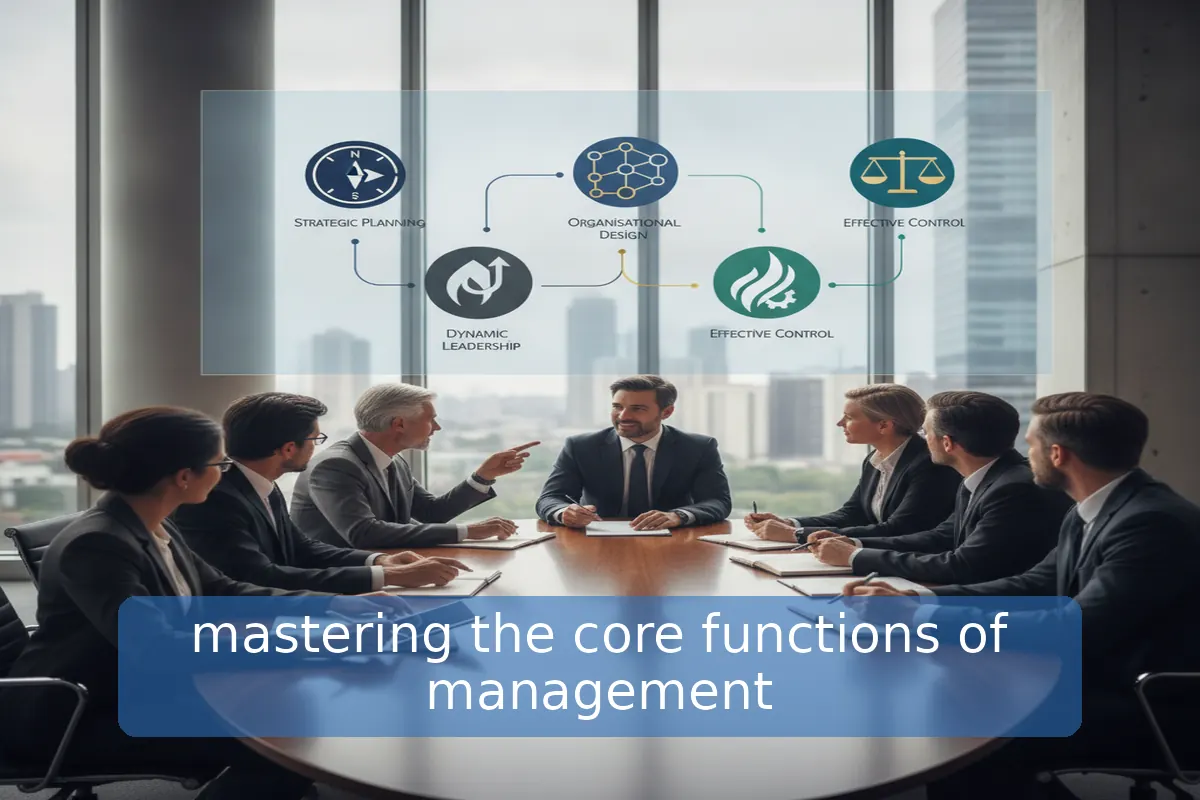
Leading vs. Directing: Mastering Influence and Motivation
The leading function of management is arguably the most dynamic and human-centric. While often used interchangeably, “leading” and “directing” carry distinct connotations in modern management, particularly in 2026. Understanding this difference is crucial for fostering high-performing, engaged teams.
Directing typically refers to the process of instructing subordinates, overseeing their work, and ensuring compliance with established procedures and plans. It’s often associated with a more top-down, authoritarian approach, focusing on task completion and adherence to rules.
Leading, on the other hand, is a broader and more nuanced concept. It involves inspiring, motivating, and influencing individuals and teams to achieve organisational goals voluntarily and enthusiastically. Modern leadership emphasises empowerment, collaboration, and personal growth.
Here’s a comparison of these two approaches:
| Feature | Traditional Directing | Modern Leading |
|---|---|---|
| Primary Focus | Task completion, adherence to rules, oversight | Inspiration, motivation, empowerment, vision articulation |
| Approach | Authoritarian, top-down, command-and-control | Collaborative, facilitative, coaching, servant leadership |
| Communication | One-way (instructions, orders) | Two-way (dialogue, feedback, active listening) |
| Decision-Making | Centralised, manager-driven | Decentralised, participatory, encourages autonomy |
| Impact on Team | Compliance, dependence, potential disengagement | Engagement, ownership, innovation, skill development |
| Suitable Context | Crisis situations, highly standardised tasks, junior teams | Dynamic environments, complex projects, experienced teams |
Effective leadership in 2026 integrates elements of both, but with a significant lean towards empowering and inspiring. Key aspects of the leading function include:
Motivation: Understanding what drives individuals and teams, and creating an environment where they feel valued, challenged, and supported to perform their best. This includes intrinsic and extrinsic motivators.
Communication: Establishing clear, open, and consistent communication channels to convey vision, goals, feedback, and expectations. High-impact business communication is vital.
Team Building: Fostering a cohesive and collaborative team environment where individuals support each other and work effectively towards shared objectives.
Conflict Resolution: Mediating disagreements and finding constructive solutions that maintain team harmony and productivity.
Change Management: Guiding individuals and the organisation through periods of transition, ensuring smooth adaptation and minimal disruption.
Employee Development: Investing in training, mentorship, and career progression opportunities to enhance individual and collective capabilities.
Example: In leading the AI product team, a modern manager would not just dictate tasks (directing) but would regularly engage with engineers, solicit their ideas for design improvements, provide mentorship on new technologies, celebrate milestones, and advocate for their needs within the broader organisation. This empowers the team to take ownership and innovate.
How Does Effective Control Ensure Performance and Strategic Alignment?
The controlling function is the vital feedback loop that ensures organisational activities are moving towards planned objectives. It’s not just about finding faults, but about maintaining quality, identifying deviations, and making timely adjustments to keep the organisation on track.
The process of controlling typically involves four key steps:
Establishing Performance Standards: Setting clear, measurable benchmarks against which actual performance will be judged. These standards should be directly linked to the organisation’s goals and strategic objectives.
Measuring Actual Performance: Systematically collecting data on current activities and outcomes. In 2026, this often involves real-time dashboards, advanced analytics, and automated reporting systems.
Comparing Actual Performance with Standards: Analysing the measured performance against the established benchmarks to identify any variances or deviations. This step answers the question: “Are we on track?”
Taking Corrective Action: If significant deviations are found, implementing measures to bring performance back in line with standards. This could involve adjusting plans, reallocating resources, providing additional training, or even revising the standards themselves if they are found to be unrealistic.
Effective control mechanisms are crucial for:
Strategic Alignment: Ensuring that day-to-day operations contribute directly to the organisation’s overarching strategic goals.
Efficiency and Productivity: Identifying bottlenecks, inefficiencies, and areas for improvement to optimise resource utilisation and output.
Quality Assurance: Maintaining desired standards for products, services, and processes (linking to Quality Management Essentials).
Risk Mitigation: Early detection of potential problems before they escalate into major crises.
Accountability: Holding individuals and teams responsible for their performance against agreed-upon targets.
Example: For the AI product launch, controlling would involve tracking development milestones, budget expenditure, software bug rates, and early user feedback against planned targets. If testing reveals a higher-than-expected bug rate (deviation), corrective action might involve reallocating engineering resources, implementing additional quality assurance steps, or even delaying the launch to ensure product stability.
What Common Pitfalls Should Managers Actively Avoid?
Even experienced managers can fall into common traps that undermine the effectiveness of the managerial functions. Being aware of these pitfalls is the first step towards avoiding them and enhancing overall organisational performance.
Here are critical mistakes to watch out for:
Inadequate Planning:
- Mistake: Failing to conduct thorough environmental scans, neglecting risk assessment, or setting unrealistic goals without clear actionable steps.
- Impact: Leads to reactive decision-making, missed opportunities, and a lack of clear direction for the team.
- Avoid By: Embracing continuous planning cycles, involving diverse stakeholders in goal setting, and using scenario planning to anticipate multiple futures.
Poor Organising and Delegation:
- Mistake: Micromanaging, failing to delegate effectively, creating unclear reporting structures, or assigning tasks without corresponding authority.
- Impact: Demotivates employees, creates bottlenecks, stifles innovation, and overburdens managers.
- Avoid By: Clearly defining roles and responsibilities, empowering teams with autonomy, and providing necessary resources and training for delegated tasks.
Ineffective Leading and Communication:
- Mistake: Lack of clear communication, inconsistent feedback, failing to motivate or inspire teams, or adopting a “command and control” style in an environment that requires collaboration.
- Impact: Low team morale, high employee turnover, misunderstandings, and resistance to change.
- Avoid By: Practising active listening, providing constructive and timely feedback, fostering psychological safety, and adapting leadership styles to team needs and context (referencing LBTA’s Effective Organisational Leadership).
Weak or Reactive Controlling:
- Mistake: Lacking clear performance metrics, failing to monitor progress regularly, focusing only on negative deviations, or taking corrective action too late.
- Impact: Performance issues go unaddressed, resources are wasted, and strategic goals are missed.
- Avoid By: Implementing robust KPIs, using real-time data for monitoring, establishing regular review cycles, and focusing on continuous improvement rather than just fault-finding.
Ignoring the Interconnectedness:
- Mistake: Treating planning, organising, leading, and controlling as separate, independent functions rather than an integrated system.
- Impact: Disjointed efforts, conflicting priorities, and an inability to adapt effectively to change.
- Avoid By: Adopting a holistic management perspective, ensuring alignment between all functions, and regularly reviewing how each function supports the others.
Implementing Effective Management: A Practical Framework for 2026 Leaders
Successfully applying the functions of management in 2026 requires a proactive, adaptable, and human-centred approach. This framework provides actionable steps for leaders to enhance their managerial effectiveness across all four core functions.
A Holistic Management Effectiveness Checklist
To ensure your management practices are robust and future-ready, consider the following practical checklist:
For Planning Excellence:
Define Clear Vision & Mission: Is our organisational purpose clearly articulated and understood by all stakeholders?
Set SMART Goals: Are our objectives Specific, Measurable, Achievable, Relevant, and Time-bound, and do they align with our strategic direction?
Conduct Regular Environmental Scans: Do we consistently monitor market trends, competitor activities, and technological advancements to inform our plans?
Integrate Risk Management: Have we identified potential risks for our plans and developed clear mitigation strategies?
Embrace Agile Planning: Are we using iterative planning cycles, allowing for flexibility and adaptation based on new information or changing conditions?
For Organising for Efficiency:
Clarify Roles & Responsibilities: Does every team member understand their specific tasks, authority, and accountability?
Optimise Organisational Structure: Is our structure (e.g., flat, matrix, agile teams) best suited for our goals and culture, promoting collaboration over silos?
Delegate Effectively: Are we empowering employees by delegating tasks with appropriate authority and support, avoiding micromanagement?
Streamline Workflows: Have we identified and eliminated bottlenecks or inefficient processes that hinder productivity?
Foster Cross-Functional Collaboration: Are mechanisms in place to encourage teams from different departments to work together on shared objectives?
For Leading with Impact:
Communicate Transparently: Do we ensure open, honest, and regular communication regarding goals, progress, and challenges?
Motivate & Inspire: Are we actively working to understand and address employee needs, fostering a positive and engaging work environment?
Develop Talent: Are we investing in continuous learning, mentorship, and career development opportunities for our team members?
Practise Adaptive Leadership: Do we adjust our leadership style based on the situation, team maturity, and individual needs?
Champion Change: Are we effectively guiding our teams through transitions, explaining the “why” and addressing concerns proactively?
For Controlling for Performance:
Establish Key Performance Indicators (KPIs): Do we have clear, measurable metrics that accurately reflect progress towards our strategic goals? (See Key Performance Indicators and Optimisation course)
Implement Real-time Monitoring: Are we leveraging technology to track performance data in real-time, allowing for immediate insights?
Conduct Regular Reviews: Do we hold consistent performance reviews (individual, team, and organisational) to assess progress and identify deviations?
Facilitate Corrective Action: Do we have clear processes for addressing underperformance or unexpected challenges, ensuring timely and effective interventions?
Promote Continuous Improvement: Is our control process focused on learning and refining operations, rather than just assigning blame?
By consistently applying this framework, leaders can ensure that the basic functions of management are not just theoretical concepts but practical tools that drive tangible results and foster organisational resilience in 2026.
When Do Management Functions Need Adaptation for Different Business Contexts?
The application of managerial functions is rarely a one-size-fits-all scenario. Effective managers understand that the specific context of an organisation profoundly influences how planning, organising, leading, and controlling should be implemented. Adapting your approach is crucial for relevance and impact.
Key factors that necessitate adaptation include:
Organisational Size and Maturity:
- Start-ups: Often require more agile planning, fluid organising structures, highly directive (initially) yet inspiring leadership, and flexible control systems.
- Large Corporations: Benefit from more formalised planning processes, hierarchical or matrix organising, transformational leadership, and sophisticated, multi-layered control mechanisms.
Industry Type:
- Highly Regulated Industries (e.g., Finance, Healthcare): Demand meticulous planning, rigid organising structures, compliance-focused leadership, and strict, auditable control systems.
- Creative or Tech Industries: Thrive on flexible planning, organic organising, empowering and innovative leadership, and outcome-based control.
Organisational Culture:
- Hierarchical Cultures: May respond better to more traditional directing initially, with a gradual shift towards leading.
- Collaborative Cultures: Flourish under participative planning, self-organising teams, and empowering leadership styles.
Market Dynamics and Volatility:
- Stable Markets: Allow for longer-term, more predictable planning.
- Volatile Markets: Require continuous scenario planning, highly adaptable organising, agile leadership, and real-time control with rapid corrective action.
Geographic and Cultural Diversity:
- Multi-cultural Workplaces: Necessitate culturally sensitive planning, flexible organising to accommodate local norms, inclusive leadership styles, and control systems that respect diverse work practices (referencing Managing and Leading in a Multi-Cultural Workplace).
Crisis and Emergency Situations:
- Crisis Management: Demands rapid, decisive planning, often a temporary shift to more centralised organising, directive leadership, and immediate, focused control to mitigate damage (linking to Leadership and Decision-Making in Crisis and Emergency Situations).
Technological Advancement:
- Digital Transformation: Requires planning for new digital tools, re-organising workflows around automation, leading teams through technological change, and controlling performance through data analytics.
Understanding these contextual nuances allows managers to apply the functions of management not as rigid rules, but as flexible frameworks that can be tailored to maximise effectiveness, foster innovation, and ensure sustained success in diverse environments.
Expert Insight
“The essence of effective management in 2026 is not merely applying the four functions, but mastering their dynamic interplay. A manager who can seamlessly pivot from strategic planning to empowering leadership, then ensure diligent control, is not just overseeing operations; they are architecting organisational resilience and future success. It’s less about ticking boxes and more about cultivating an adaptive ecosystem where every function reinforces the others.”
— Industry experts confirm that a holistic and adaptive approach is paramount.
Key Terms
Planning: The process of defining goals, establishing strategies, and developing action plans to achieve objectives.
Organising: The function of structuring resources and activities to accomplish objectives, including task division, delegation, and establishing reporting relationships.
Leading: The act of influencing, motivating, and directing individuals and teams to work towards common goals.
Controlling: The process of monitoring performance, comparing it to standards, and taking corrective action to ensure objectives are met.
Delegation: The assignment of authority to another person (normally from a manager to a subordinate) to carry out specific activities.
How Can LBTA Support Your Professional Growth?
At LBTA, we understand that mastering the functions of management is a continuous journey, especially in the rapidly evolving landscape of 2026. Our expertly designed courses provide the practical tools, strategic insights, and advanced techniques you need to excel in planning, organising, leading, and controlling within any organisational context.
Whether you’re a new manager, an experienced leader, or aspiring to a strategic role, our programmes are tailored to enhance your capabilities. Consider courses such as:
The Complete Course on Management: A foundational programme covering all core managerial functions in depth.
Leadership and Strategic Impact: Focuses on developing dynamic leadership skills essential for motivating teams and driving strategic alignment.
Successful Planning, Organising and Delegating: Provides practical frameworks and hands-on exercises for optimising these foundational functions.
Key Performance Indicators and Optimisation: Equips you with the skills to establish robust control mechanisms and measure organisational performance effectively.
Advanced Strategic Management: Delves into sophisticated planning and control techniques for complex global environments.
By investing in LBTA, you’re not just attending a course; you’re gaining a competitive edge, ensuring you possess the E-E-A-T (Experience, Expertise, Authoritativeness, Trust) to lead with confidence and drive your organisation’s success. Explore our full range of Management and Leadership courses today to find the perfect fit for your professional development journey.
Frequently Asked Questions
Q: What are the main management functions?
Q: How do management functions contribute to organisational success?
Q: What types of management exist in organisations?
Q: What are some best practices for effective management in 2026?
Q: How can management functions be applied in small businesses?
Q: What role does leadership play in management functions?
Quick Summary
- For UK professionals in 2026, the best project management courses and certifications balance global recognition (PMP) with UK-specific frameworks (PRINCE2) and agile adaptability (Scrum, SAFe)
- selecting the right path depends on your experience, career goals, and target industry demands
- focusing on practical application, accredited providers, and essential soft skills beyond certification is crucial for tangible career growth
- online learning offers flexibility, but quality and instructor expertise remain paramount
Which Project Management Certifications Offer the Best Career Growth in the UK for 2026?
Choosing the “best” project management certification for career growth in the UK involves understanding industry demand, salary potential, and your personal career trajectory. While global recognition is key, UK-specific relevance often provides an added advantage.
Here are the top project management certifications highly valued in the UK for professionals aiming for significant career advancement in 2026:
Project Management Professional (PMP®):
- Why it’s great for career growth: Awarded by the Project Management Institute (PMI), the PMP is globally recognised as the gold standard for experienced project managers. It validates your ability to lead and direct projects across any industry. In the UK, PMP holders consistently command higher salaries and are sought after for senior project, programme, and portfolio management roles. It demonstrates a comprehensive understanding of project lifecycle, predictive, agile, and hybrid methodologies.
- Ideal for: Experienced project managers (3+ years) looking for international recognition and advancement into leadership positions.
PRINCE2® (Projects IN Controlled Environments):
- Why it’s great for career growth: Developed by the UK government, PRINCE2 is the de facto standard for project management in the UK public sector and is widely adopted across private industries. It provides a structured, process-driven approach to project management, focusing on clear roles, responsibilities, and management by exception. While PMP focuses on what to do, PRINCE2 focuses on how to do it within a structured framework.
- Ideal for: UK professionals, especially those in government, defence, or large organisations valuing a structured methodology. Excellent for those new to project management (Foundation level) and experienced managers seeking a practical framework (Practitioner level).
Certified ScrumMaster (CSM®) / Professional Scrum Master (PSM
 ):
):- Why it’s great for career growth: As agile methodologies become mainstream, certifications like CSM (Scrum Alliance) and PSM (Scrum.org) are crucial. They validate your understanding of the Scrum framework and your ability to facilitate Scrum teams, remove impediments, and foster an environment for successful project delivery. Demand for Agile-proficient professionals, particularly Scrum Masters, continues to surge in the UK’s tech, digital, and innovation-driven sectors.
- Ideal for: Professionals working in or transitioning to agile environments, particularly in software development, IT, and product management roles.
SAFe® Agilist (Scaled Agile Framework):
- Why it’s great for career growth: For larger organisations implementing Agile at scale, SAFe certifications are increasingly important. The SAFe Agilist certification, for instance, trains leaders and executives to guide a Lean-Agile transformation. It’s highly valuable for those working in or aspiring to roles in large-scale agile initiatives.
- Ideal for: Leaders, managers, and agile coaches in large enterprises adopting SAFe.
APM Project Management Qualification (APM PMQ):
- Why it’s great for career growth: Offered by the Association for Project Management (APM), the chartered body for the project profession in the UK, the PMQ (formerly APMP) is a respected qualification. It demonstrates knowledge of all elements of project management, from planning and risk management to communication and stakeholder engagement, aligned with the APM Body of Knowledge.
- Ideal for: UK-based project managers seeking a nationally recognised qualification that provides a solid foundation across various project contexts.
Expert Insight:
“In the UK, the blend of PMP for global credibility and PRINCE2 for local relevance often creates the most powerful professional profile. However, neglecting Agile certifications in today’s rapidly evolving project landscape is a significant oversight. The true differentiator is not just holding a certificate, but how effectively you apply these varied methodologies in real-world scenarios.” – Industry experts confirm that a multi-faceted approach to certification offers the best competitive edge.
PMP vs. PRINCE2 vs. Agile: Which Project Management Certification Aligns with Your UK Career Path?
Deciding between the major project management certifications requires a clear understanding of their distinct philosophies, target audiences, and industry applicability, especially within the UK context. Here’s a comparison to help you align your choice with your career aspirations.
| Feature | PMP® (Project Management Professional) | PRINCE2® (Projects IN Controlled Environments) | Agile (e.g., CSM®, PSM) |
|---|---|---|---|
| Focus | Global best practices, predictive, agile & hybrid approaches, leadership skills, ethical conduct. | Structured, process-driven project management, governance, control, management by exception. | Iterative, incremental delivery, flexibility, collaboration, self-organising teams. |
| Methodology | Standardised processes, knowledge areas (PMBOK® Guide). | Principles, themes, processes for managing projects. | Scrum, Kanban, Lean, XP, DSDM. |
| Prerequisites | High school diploma + 5 yrs PM experience (7,500 hours) OR Bachelor’s degree + 3 yrs PM experience (4,500 hours) + 35 hours of project management education. | None for Foundation. Practitioner requires Foundation or equivalent PM experience/certs. | Usually a 2-day course; no formal prerequisites for CSM/PSM. |
| Target Audience | Experienced project managers seeking leadership roles across industries globally. | UK public sector, large organisations, anyone valuing a highly structured approach. | Teams and individuals in dynamic, rapidly changing environments (e.g., software). |
| UK Relevance | High for private sector, large corporations, global roles. Increasingly valued. | Very high, particularly in government, defence, and large UK enterprises. | Rapidly increasing across all innovative sectors in the UK. |
| Career Impact | Higher salary potential, leadership roles, global mobility. | Strong for UK-specific roles, clear career progression within structured environments. | Essential for modern tech, digital, and product development roles. |
| LBTA Relevance | LBTA offers courses on “The Complete Course on Project Management”, “Project Management Specialist” and “Project Leadership” which align with PMP knowledge areas. | LBTA offers courses covering “Project Management Essentials” and “Project Start-up Seminar” which can support PRINCE2 principles. | LBTA provides training in “Continuous Innovation and Process Improvement” and “Agile Leadership” which complement Agile certifications. |
Key Considerations for Your UK Career Path:
Your Current Role & Industry: Are you in a highly regulated industry (e.g., finance, government) where PRINCE2’s structure is preferred? Or in a fast-paced tech startup where Agile is paramount?
Your Experience Level: PMP requires significant experience, while PRINCE2 Foundation and Agile certifications are more accessible for those starting out or transitioning.
Your Future Goals: Do you envision leading large, complex international projects (PMP), or managing internal UK-based projects with strict governance (PRINCE2), or facilitating product development in an iterative manner (Agile)?
Many UK professionals find that a combination of certifications offers the most robust skill set, for example, PRINCE2 Foundation/Practitioner for foundational structure, followed by PMP for leadership and global recognition, and an Agile certification for adaptability.

Are Online Project Management Courses Effective, and Which Options Stand Out for UK Learners?
The effectiveness of online project management courses has soared, especially with advancements in virtual learning technologies. For UK learners, online options offer unparalleled flexibility, allowing professionals to upskill without disrupting their current work commitments.
Effectiveness of Online Project Management Training:
Flexibility and Accessibility: Online courses remove geographical barriers and offer self-paced learning, crucial for busy professionals. Many platforms provide 24/7 access to materials.
Cost-Effectiveness: Often, online courses are more affordable than in-person equivalents, reducing travel and accommodation costs.
Diverse Learning Resources: High-quality online courses blend video lectures, interactive exercises, discussion forums, quizzes, and practical case studies.
Accreditation and Recognition: Reputable online providers often offer courses that lead to recognised certifications or professional development units (PDUs) required for maintaining credentials like PMP.
Practical Application: The best online courses incorporate real-world scenarios and project simulations, allowing learners to apply theoretical knowledge, much like LBTA’s focus on practical, hands-on learning in many of its courses like “Project Planning, Scheduling and Cost Estimating Skills.”
Best Online Project Management Courses for UK Learners (Considerations for 2026):
When evaluating online options, UK professionals should prioritise:
Accreditation: Ensure the course is from an accredited provider or directly prepares you for official certification exams (e.g., PMI Authorized Training Partner for PMP, AXELOS Accredited Training Organisation for PRINCE2).
Instructor Expertise: Look for courses taught by certified and experienced project managers with real-world insights.
Interactive Content: Static lectures are less effective. Seek out courses with engaging exercises, group discussions (even virtual), and practical assignments.
UK Contextualisation: While global certifications are important, courses that incorporate UK case studies or regulatory nuances can be highly beneficial.
Support Systems: Access to instructors, peer communities, and technical support can significantly enhance the learning experience.
Leading Online Providers & Platforms for UK Professionals:
LBTA: Offers a diverse portfolio of project management-related courses, including “The Complete Course on Project Management,” “Project Leadership,” and specialised courses like “IT Project Management,” often available in flexible formats to suit UK professionals. Our courses are designed with practical application and current industry standards in mind.
PMI.org (Project Management Institute): Offers official PMP exam prep resources, online courses, and local UK chapters for networking.
AXELOS.com (PRINCE2): Provides official guidance and lists accredited training organisations (ATOs) for PRINCE2 courses, many of which offer online options.
Coursera / edX: Partner with top universities (e.g., University of California, Irvine, Google) for specialisations and professional certificates in project management. These often offer a blend of theoretical depth and practical application.
Udemy / LinkedIn Learning: Provide a vast array of courses, from beginner to advanced, often at lower price points. While some are excellent, due diligence is required to ensure quality and instructor credentials. Look for highly-rated courses with comprehensive content.
How to Choose the Ideal Project Management Course: A Practical Decision Framework for UK Professionals
Selecting the perfect project management course is a strategic decision that can significantly impact your career trajectory. Use this practical framework to guide your choice in 2026:
Assess Your Current Experience and Career Goals:
- Current Experience Level: Are you a beginner, an aspiring project manager, or an experienced professional seeking advanced skills?
- Beginner/Aspiring: Consider PRINCE2 Foundation, CAPM® (Certified Associate in Project Management), or introductory Agile courses.
- Experienced (3+ years): PMP, PRINCE2 Practitioner, or advanced Agile certifications like SAFe Agilist.
- Short-Term Goals: Do you need a qualification for a specific job application, or to immediately improve your current project’s performance?
- Long-Term Goals: Where do you see yourself in 5-10 years? Leading a PMO, becoming a programme director, or specialising in a niche like IT project management? LBTA offers courses like “Strategy Design Bootcamp” and “Leadership and Strategic Impact” which can complement long-term leadership aspirations.
- Industry Focus: Are you aiming for roles in construction, IT, healthcare, oil & gas, or public sector? Different industries favour different methodologies.
- Current Experience Level: Are you a beginner, an aspiring project manager, or an experienced professional seeking advanced skills?
Evaluate Industry Relevance and UK Job Market Demands:
- Job Advertisements: Research current UK job postings for project management roles you aspire to. Note the most frequently requested certifications and skills.
- Industry Trends: Is your target industry rapidly adopting Agile (e.g., FinTech, digital media) or maintaining traditional, structured approaches (e.g., infrastructure, government)?
- Networking: Speak with experienced project managers in your desired field in the UK to understand which certifications they value and how they’ve benefited.
- Salary Expectations: Research salary guides for certified professionals in the UK. PMP holders, for instance, often report significantly higher salaries.
Consider Learning Format, Accreditation, and Instructor Expertise:
- Learning Format:
- Online (Self-paced): Ideal for flexibility, requires self-discipline.
- Online (Instructor-led): Offers structure, interaction, and often faster completion.
- In-person (Classroom): Best for direct interaction, networking, and immersive learning. LBTA provides both classroom and virtual live training options.
- Accreditation: Crucial for credibility. Ensure the training provider is accredited by PMI, AXELOS, Scrum Alliance, Scrum.org, or APM, depending on the certification.
- Instructor Expertise: Look for trainers who are not just certified but also have extensive practical experience in project management. A good instructor can bridge the gap between theory and real-world application.
- Course Content & Resources: Review the curriculum, learning materials, practice exams, and post-course support.
- Learning Format:
Factor in Cost, Time Commitment, and Continuous Professional Development:
- Course Fees & Exam Costs: Budget for both the training course and the official certification exam. Some certifications require annual renewal fees.
- Time Commitment: How much time can you realistically dedicate to studying? PMP requires significant study hours, while some Agile certifications are completed in a short workshop.
- PDUs/CPD: Consider how the course contributes to Continuous Professional Development (CPD) or Professional Development Units (PDUs) required to maintain existing certifications. Many LBTA courses, such as “Effective Business Decisions Using Data Analysis” or “Strategic Planning Professional,” can contribute to your PDU requirements.
- Employer Support: Check if your employer offers funding or time off for professional development.
Beyond Certifications: What Essential Skills Define a Successful UK Project Manager in 2026?
While certifications provide a foundational structure and validate knowledge, true success as a project manager in the UK in 2026 relies heavily on a robust set of soft and hard skills. These competencies enable effective leadership, problem-solving, and team motivation, often distinguishing top performers.
Key essential skills for a successful UK project manager:
Leadership and Strategic Impact:
- Inspiring and motivating teams, even in challenging environments.
- Aligning projects with organisational strategic goals.
- Making tough decisions and taking accountability.
- Relevant LBTA topics: “Effective Organisational Leadership,” “Leadership and Strategic Impact,” “The Essentials of Leadership,” “Strategy Design Bootcamp.”
Communication Essentials:
- Clear, concise, and persuasive communication with stakeholders at all levels.
- Active listening and effective feedback loops.
- Adapting communication style to different audiences (e.g., technical team vs. executive board).
- Relevant LBTA topics: “High Impact Business Communication,” “Communication Essentials,” “Advanced Communication and Interpersonal Skills.”
Risk Management and Organisational Resilience:
- Proactive identification, assessment, and mitigation of project risks.
- Developing contingency plans and adapting to unforeseen challenges.
- Building project and organisational resilience to manage change and crises.
- Relevant LBTA topics: “Effective Business Risk Management Strategies using ISO 31000 Framework,” “Organisational Resilience,” “Strategic Crisis Management.”
Effective Negotiation, Persuasion, and Critical Thinking:
- Negotiating scope, resources, and timelines with stakeholders and vendors.
- Influencing decisions and gaining buy-in without direct authority.
- Analysing complex problems, evaluating options, and making data-driven decisions.
- Relevant LBTA topics: “Effective Negotiation, Persuasion and Critical Thinking,” “The Professional Negotiator,” “Advanced Problem Solving and Decision Making.”
Stakeholder Management:
- Identifying, engaging, and managing expectations of diverse stakeholders.
- Building strong relationships and fostering collaboration.
- Resolving conflicts and navigating political landscapes.
- Relevant LBTA topics: “Managing and Leading in a Multi-Cultural Workplace,” “Strategic Stakeholder Management Essentials.”
Quality Management and Continuous Improvement:
- Ensuring project deliverables meet quality standards and requirements.
- Implementing continuous improvement processes within projects and teams.
- Relevant LBTA topics: “Quality Management Essentials,” “Continuous Innovation and Process Improvement,” “ASQ Approved Lean Six Sigma Green Belt.”
Data Management and Analysis:
- Proficiency in using tools like Excel for data tracking, analysis, and reporting project progress.
- Interpreting data to make informed project decisions.
- Relevant LBTA topics: “Data Management, Manipulation and Analysis using Excel,” “Effective Business Decisions Using Data Analysis.”
These skills are not merely “nice-to-haves”; they are fundamental drivers of project success and personal career advancement. A well-rounded project manager continuously develops these alongside their technical expertise.
Common Pitfalls: What Mistakes Should UK Professionals Avoid When Selecting PM Training?
The path to becoming a certified and skilled project manager is fraught with potential missteps. UK professionals, in particular, should be aware of these common mistakes when choosing project management training in 2026:
Choosing Based Solely on Popularity or Price:
- Mistake: Opting for the cheapest or most talked-about course without considering its relevance to your career goals or industry.
- Avoidance: Research thoroughly. A low-cost course might lack accreditation or depth, while a popular one might not align with your specific industry’s needs (e.g., choosing PMP when your entire sector uses PRINCE2).
Ignoring Prerequisites and Experience Requirements:
- Mistake: Enrolling in an advanced certification (like PMP) without meeting the necessary experience hours or prior education. This leads to wasted time and money if you can’t sit the exam.
- Avoidance: Carefully review the official certification body’s prerequisites before committing to a training course.
Neglecting Practical Application and Hands-on Learning:
- Mistake: Focusing purely on theoretical knowledge and memorisation for exams, without understanding how to apply concepts in real project scenarios.
- Avoidance: Seek out courses that emphasise practical exercises, case studies, simulations, and group work. LBTA prioritises hands-on application to ensure skills are transferable.
Underestimating Time Commitment for Study and Exam Prep:
- Mistake: Assuming a certification can be achieved with minimal effort or study outside of the course itself. PMP, for example, requires hundreds of hours of dedicated study.
- Avoidance: Be realistic about the time you can allocate. Plan a study schedule and stick to it. Factor in potential re-take costs if you rush.
Failing to Verify Accreditation of the Training Provider:
- Mistake: Taking a course from an unaccredited provider whose training hours may not count towards official certification requirements (e.g., 35 hours for PMP).
- Avoidance: Always confirm the training provider’s accreditation status with the official certifying body (e.g., PMI, AXELOS).
Overlooking the Importance of Soft Skills Development:
- Mistake: Believing that technical project management knowledge alone is sufficient for career success.
- Avoidance: Actively seek out training and development in crucial soft skills like leadership, communication, negotiation, and conflict resolution, which are equally, if not more, important. Many of LBTA’s courses on “Leadership Development Programme” or “Advanced Communication and Interpersonal Skills” are designed to fill these gaps.
Not Considering the UK Job Market’s Specific Needs:
- Mistake: Pursuing a certification that has limited demand or recognition within the specific UK industries you are targeting.
- Avoidance: As highlighted in our decision framework, thoroughly research UK job market trends and employer preferences for certifications in your desired sector.
By proactively addressing these common pitfalls, UK professionals can make more informed decisions, ensuring their investment in project management training yields maximum career benefits.
Maximising Your Investment: How Do UK Project Management Qualifications Lead to Tangible Career Advancement?
A strategic investment in project management qualifications in the UK isn’t just about adding a line to your CV; it’s about unlocking tangible career advancement opportunities. The right certifications and training can significantly impact your professional trajectory in several key ways:
Increased Earning Potential:
- Evidence: Studies by PMI consistently show that PMP certified professionals earn significantly more than their non-certified counterparts. Similarly, PRINCE2 Practitioner holders often command higher salaries, especially in roles requiring structured governance.
- Impact: UK employers are willing to pay a premium for validated expertise, seeing it as a direct contributor to project success and organisational efficiency.
Enhanced Job Opportunities and Employability:
- Evidence: Many UK job descriptions for project management roles now list specific certifications (PMP, PRINCE2, Agile) as “essential” or “highly desirable.”
- Impact: Holding relevant qualifications immediately sets you apart in a competitive job market, opening doors to a wider range of roles, from Project Coordinator to Programme Director across diverse sectors like IT, construction, finance, and public services.
Faster Career Progression:
- Evidence: Certified project managers are often fast-tracked for promotions into more senior roles, such as Lead Project Manager, Portfolio Manager, or Head of PMO.
- Impact: The structured knowledge and validated skills gained from certifications demonstrate readiness for increased responsibility and strategic oversight, making you a prime candidate for leadership development programmes. LBTA offers “The Leadership Development Programme” and “Advanced Strategic Management” to support this progression.
Improved Project Success Rates:
- Evidence: Professionals trained in recognised methodologies are better equipped to manage scope, schedule, budget, and risks effectively, leading to higher project success rates.
- Impact: This translates into a strong track record, making you a valuable asset to any organisation and building a reputation for reliable project delivery.
Global Mobility and Recognition:
- Evidence: Global certifications like PMP are recognised worldwide, facilitating career opportunities beyond the UK.
- Impact: If you aspire to work internationally or for multinational corporations operating in the UK, globally recognised certifications are indispensable.
Credibility and Professional Confidence:
- Evidence: Holding a certification validates your expertise and commitment to the profession.
- Impact: This boosts your confidence in leading projects, communicating with stakeholders, and making critical decisions, enhancing your professional presence and influence.
Access to Professional Networks and Resources:
- Evidence: Certification bodies like PMI and APM offer membership benefits including networking events, online communities, and exclusive resources.
- Impact: These networks provide invaluable opportunities for mentorship, knowledge sharing, and staying abreast of the latest industry trends and best practices, further enriching your career growth.
By strategically selecting and pursuing the right project management qualifications, UK professionals are not just investing in education, but in a future of enhanced opportunities, increased influence, and sustained career success.
Expert Insight
“The landscape of project management in the UK is constantly evolving, driven by technological advancements and global economic shifts. While core methodologies like PRINCE2 remain crucial for structured environments, the demand for Agile-proficient leaders capable of navigating uncertainty and driving rapid value delivery has never been higher. The most successful professionals in 2026 will possess a hybrid skillset, combining foundational rigour with adaptive agility, underpinned by strong leadership and communication. Certifications are merely the entry ticket; continuous learning and practical application are the journey.”
Key Terms
PMP® (Project Management Professional): A globally recognised certification for experienced project managers, awarded by the Project Management Institute (PMI), validating expertise in leading diverse projects.
PRINCE2®: A structured project management methodology, widely used in the UK public sector and large private organisations, focusing on clear processes, roles, and responsibilities.
Agile: An iterative and incremental approach to project management, emphasising flexibility, collaboration, and rapid delivery of value, commonly used in software development and innovation.
Scrum Master: A role within the Agile Scrum framework responsible for facilitating the Scrum team, removing impediments, and ensuring adherence to Scrum principles and practices.
Continuous Professional Development (CPD): The ongoing process of tracking and documenting the skills, knowledge, and experience gained both formally and informally, relevant for maintaining professional qualifications.
How Can LBTA Support Your Professional Growth?
At LBTA, we understand the unique demands and opportunities facing UK professionals in 2026. Our extensive portfolio of courses is meticulously designed to equip you with the practical skills and strategic insights needed to excel in project management and beyond. Whether you’re aiming for global recognition with PMP-aligned knowledge, seeking structured approaches like PRINCE2, or needing to master Agile methodologies, our expert-led programmes provide real-world application. From foundational courses like “Project Management Essentials” to advanced leadership and strategic impact training such as “Leadership and Strategic Impact,” “Strategy Design Bootcamp,” and “The Complete Course on Project Management,” we offer flexible learning formats tailored to your busy schedule. We also provide crucial complementary skills training in areas like “Effective Negotiation, Persuasion and Critical Thinking,” “High Impact Business Communication,” and “Effective Business Risk Management Strategies,” ensuring you develop a well-rounded profile that drives tangible career advancement in the dynamic UK market. Partner with LBTA to transform your potential into measurable success.
Frequently Asked Questions
Q: What is the most recognised project management certification in the UK?
Q: Are online project management courses effective for career advancement?
Q: How long does it typically take to complete a project management certification?
Q: What are the prerequisites for the PMP® certification in 2026?
Q: Is Agile project management relevant for all industries in the UK?
Q: Beyond certifications, what other skills are crucial for project managers?
Quick Summary
- Assess career goals and skill gaps for optimal course selection
- Prioritise programmes integrating globally recognised certifications like ITIL or PMP
- Evaluate diverse delivery options, contrasting online flexibility with in-person immersion
- Focus on practical, scenario-based learning and strong E-E-A-T from providers
Why is Strategic IT Management Training Essential for UK Leaders in 2026?
In 2026, the landscape of information technology continues its rapid evolution, demanding more than just technical proficiency from its leaders. UK organisations, from agile startups to multinational corporations, rely on adept IT managers to translate technological potential into tangible business value. Strategic IT management training is no longer a luxury but a necessity for several compelling reasons:
Navigating Digital Transformation: IT managers are at the forefront of digital transformation initiatives. Training provides the frameworks to plan, execute, and manage complex projects that integrate new technologies (AI, IoT, blockchain) into existing business processes, ensuring smooth transitions and measurable ROI.
Bridging the Strategy-Execution Gap: Effective IT leaders must align IT operations directly with overarching business objectives. Courses focus on strategic planning, allowing managers to understand how IT management decisions impact organisational resilience, competitive advantage, and long-term profitability.
Enhancing Leadership and Team Management: Beyond technical skills, IT managers need to lead diverse teams, foster innovation, and manage change. Training programmes often include modules on IT leadership training, communication, negotiation, and conflict resolution, crucial for motivating staff and driving successful project outcomes.
Optimising Resource Utilisation: With increasing pressure on budgets, IT managers must optimise hardware, software, and human resources. Specialised courses equip them with best practices in resource allocation, vendor management, and cost control, ensuring efficient service delivery.
Mitigating Evolving Risks: Cybersecurity threats, data privacy regulations (like GDPR in the UK), and compliance requirements are constantly shifting. Training provides the knowledge to implement robust risk management strategies and maintain a secure and compliant IT environment.
Without this strategic foundation, IT professionals risk being reactive rather than proactive, hindering innovation and potentially exposing their organisations to operational inefficiencies and significant risks.
Which Types of IT Management Courses and Certifications Are Right for You?
Choosing the right IT management course depends heavily on your current role, career aspirations, and the specific skill gaps you aim to fill. The UK market offers a diverse range of options, from foundational programmes to advanced leadership certifications.
General IT Management Programmes
These courses provide a comprehensive overview of core IT management principles. They are ideal for aspiring IT managers, project leads, or professionals transitioning into management roles.
Focus Areas: IT service management, project management fundamentals, basic cybersecurity, IT governance, financial management for IT, and team leadership.
Typical Outcomes: Develop a holistic understanding of IT operations, learn to align IT with business goals, improve decision-making processes, and enhance communication with technical and non-technical stakeholders.
Example Content: Modules often cover aspects of IT Service Management, Effective Business Decisions Using Data Analysis, and The Management Essentials.
Specialised IT Leadership Training
Designed for experienced IT managers, directors, or CIOs, these programmes delve deeper into strategic aspects, innovation, and organisational leadership. They often incorporate advanced concepts in change management, digital strategy, and fostering a culture of continuous improvement.
Focus Areas: Strategic IT planning, digital transformation leadership, innovation management, advanced risk management, executive communication, and fostering Organisational Resilience.
Typical Outcomes: Cultivate advanced leadership skills, drive strategic change, develop a future-proof IT vision, and position IT as a key enabler of business strategy.
Example Content: May include elements from Leadership and Strategic Impact, Continuous Innovation and Process Improvement, and Strategy Design Bootcamp.
Industry-Recognised Certifications (Including ‘Certificate in IT Management’)
For many UK professionals, obtaining a certificate in IT management or other industry-standard certifications is a direct path to validating expertise and enhancing employability. These are often highly regarded by employers.
ITIL (Information Technology Infrastructure Library): The global standard for IT service management.
- Focus: Best practices for delivering IT services, from strategy to operation.
- Levels: Foundation, Practitioner, Intermediate, Expert, Master.
- Best For: Professionals managing IT services, operations, and support.
PMP (Project Management Professional) or PRINCE2: For IT project management.
- Focus: Methodologies for planning, executing, and closing projects successfully.
- Best For: IT project managers, team leads, or anyone managing IT initiatives.
COBIT (Control Objectives for Information and Related Technologies): For IT governance and management.
- Focus: Framework for enterprise IT governance, risk management, and compliance.
- Best For: IT auditors, governance professionals, and senior IT leaders.
CISSP (Certified Information Systems Security Professional): For cybersecurity leadership.
- Focus: Advanced security management, risk assessment, and incident response.
- Best For: IT security managers, architects, and consultants.
Agile/Scrum Certifications: (e.g., Certified ScrumMaster, SAFe Agilist)
- Focus: Agile methodologies for software development and project delivery.
- Best For: Teams and leaders in agile development environments.
When considering a certificate in IT management, assess which certification directly supports your immediate career goals and aligns with the technologies and methodologies prevalent in your target industry.
Online vs. In-Person IT Management Training: Which Delivery Model Fits Your Learning Style?
The choice between online and in-person IT management training profoundly impacts your learning experience, scheduling flexibility, and networking opportunities. Both models have distinct advantages and disadvantages, and the “best” option often comes down to individual preference and circumstances.
| Feature | Online IT Management Training (e.g., ‘it management courses online’) | In-Person IT Management Training |
|---|---|---|
| Flexibility | High: Learn at your own pace, set your schedule, access materials 24/7. Ideal for working professionals with busy lives. | Low: Fixed schedules, specific locations. Requires dedicated time away from work/home, but can be highly immersive. |
| Cost | Often lower: Reduced travel, accommodation, and sometimes tuition fees. More accessible for a wider audience. | Higher: Includes travel, accommodation, and potentially higher tuition. Investment in a premium, focused experience. |
| Networking | Moderate: Relies on virtual forums, breakout rooms, and dedicated online communities. Can be less spontaneous but still valuable. | High: Direct interaction with peers and instructors, fostering stronger relationships and real-time collaboration. Excellent for building professional networks. |
| Engagement | Self-driven: Requires discipline and motivation. Can be challenging for some to maintain focus without direct supervision. | High: Interactive sessions, immediate Q&A, group exercises, and hands-on workshops. Facilitates deeper engagement and immediate feedback. |
| Accessibility | Very High: Accessible from anywhere with an internet connection. Excellent for professionals in remote areas or with mobility issues. | Limited: Requires physical presence at a specific location. May not be feasible for all professionals. |
| Practical Application | Often scenario-based simulations, case studies, and virtual labs. Effectiveness depends on the quality of online tools. | Direct: Hands-on exercises, role-playing, and immediate instructor feedback. Often includes dedicated lab facilities or group problem-solving. |
When Online Training Excels: If you require maximum flexibility, are self-disciplined, prefer a lower cost, or have geographical constraints. It’s excellent for continuous learning without significant career disruption.
When In-Person Training Excels: If you thrive in structured environments, value direct interaction and networking, prefer immediate feedback, or benefit from a dedicated learning space away from distractions. It’s often chosen for intensive, high-impact programmes.
Many providers, including LBTA, offer blended learning approaches, combining the best of both worlds with online modules and occasional in-person workshops, providing a balanced solution for many UK professionals.
How Do You Evaluate and Choose the Best IT Management Course Provider?
Selecting the best IT management course involves a rigorous evaluation of both the programme content and the provider’s credentials. A strategic approach ensures your investment yields maximum return.
Assess Accreditation and Reputation:
- Accreditation: Verify that the course and provider are accredited by recognised bodies (e.g., UK universities, professional associations like APMG International for PRINCE2, PeopleCert for ITIL). This ensures quality and industry recognition.
- Reputation: Research the provider’s track record. Look for testimonials, case studies, and industry partnerships. A strong reputation often indicates high-quality content and effective delivery.
- E-E-A-T Signals: Does the provider demonstrate Experience, Expertise, Authoritativeness, and Trust? Look for instructors with real-world industry experience, published thought leadership, and strong industry connections.
Scrutinise the Curriculum and Learning Outcomes:
- Relevance: Does the curriculum align with current industry trends in the UK and your specific career goals? Does it cover crucial areas like cloud management, cybersecurity governance, or agile methodologies?
- Depth vs. Breadth: Does the course offer sufficient depth in key areas, or is it too superficial? For a certificate in IT management, ensure it covers practical application, not just theory.
- Practical Application: Look for courses that include case studies, simulations, group projects, or real-world scenarios. Theoretical knowledge is important, but practical skills are paramount for an IT manager course.
- Learning Outcomes: Clearly defined learning outcomes allow you to measure your progress and ensure the course delivers the skills you need.
Evaluate Instructor Expertise:
- Industry Experience: Are the instructors current or former IT leaders, consultants, or specialists with demonstrable real-world experience? Their insights are invaluable.
- Teaching Pedagogy: Do they employ diverse teaching methods (lectures, workshops, discussions)? Are they engaging and able to simplify complex concepts?
- Accessibility: Will you have opportunities to interact directly with instructors for questions and guidance?
Consider Course Logistics and Support:
- Duration and Schedule: Does the course duration fit your timeline? Is the schedule flexible enough for your professional commitments?
- Support Services: What kind of support is offered? This could include technical support for online platforms, career guidance, alumni networks, or post-course resources.
- Post-Course Resources: Does the provider offer ongoing access to materials, alumni networks, or continued professional development opportunities?
Analyse Cost and Value Proposition:
- Total Cost: Beyond tuition, consider hidden costs like exam fees, study materials, or travel.
- ROI: Evaluate the potential return on investment. Will the skills gained lead to salary increases, promotions, or new career opportunities? A higher-priced course with strong career outcomes might offer better value than a cheaper, less impactful one.
- Funding Options: Are there any employer sponsorship programmes, scholarships, or payment plans available?
By systematically evaluating these criteria, you can confidently choose a provider that offers the best IT management course for your individual needs and career ambitions in 2026.
What Common Pitfalls Should UK Professionals Avoid When Selecting IT Management Training?
Choosing an IT management training programme can be complex, and several common mistakes can lead to wasted time, money, and missed career opportunities. Being aware of these pitfalls will help you make a more informed decision.
Prioritising Price Over Value:
- Mistake: Opting for the cheapest course without thoroughly evaluating its content, instructor quality, or accreditation.
- Consequence: May result in a low-quality education, unrecognised certification, or skills that aren’t truly valuable in the job market.
- Avoidance: Focus on the long-term ROI. A slightly higher investment in a reputable, accredited programme often yields far greater career benefits.
Ignoring Accreditation and Industry Recognition:
- Mistake: Enrolling in a course from an unaccredited provider or one whose certifications are not widely recognised in the UK IT sector.
- Consequence: Your certificate in IT management might hold little weight with potential employers, undermining your efforts to advance.
- Avoidance: Always verify accreditation. Research which certifications are most valued in your target roles and industries (e.g., ITIL, PMP, COBIT are globally recognised).
Failing to Align with Career Goals:
- Mistake: Choosing a course based on general interest or popular trends rather than a clear understanding of your personal career trajectory.
- Consequence: You might gain skills that aren’t relevant to your desired role (e.g., taking a project management course when your goal is cybersecurity leadership).
- Avoidance: Conduct a thorough self-assessment of your career goals. What specific role do you aspire to? What skills are essential for that role? Then, match the course to those specific needs.
Underestimating the Importance of Practical Application:
- Mistake: Selecting a purely theoretical course that lacks hands-on exercises, case studies, or real-world problem-solving components.
- Consequence: You may struggle to apply learned concepts in a practical work environment, lacking the confidence and experience employers seek.
- Avoidance: Look for courses that emphasise practical application. Ask about simulations, project work, and opportunities to apply theory to realistic scenarios.
Neglecting Instructor Background and Experience:
- Mistake: Not researching the instructors’ qualifications, industry experience, or teaching style.
- Consequence: Learning from instructors who lack real-world insights or effective teaching methods can diminish the quality of your education.
- Avoidance: Seek out trainers with extensive, current industry experience. They bring invaluable practical perspectives and can share relevant anecdotes and best practices.
Overlooking Post-Course Support and Networking:
- Mistake: Focusing solely on the course content and neglecting the value of alumni networks, career services, or ongoing support.
- Consequence: You miss out on valuable opportunities for mentorship, job leads, and continued professional development after the course concludes.
- Avoidance: Inquire about alumni communities, career guidance, and any additional resources available to graduates. These can significantly extend the value of your training.
By proactively addressing these common pitfalls, UK professionals can ensure their investment in IT manager training is both strategic and rewarding.
Beyond the Certificate: What Tangible Career Benefits Will You Gain?
Completing a robust IT management course or earning a recognised certificate in IT management delivers far more than just a piece of paper. The tangible benefits extend across professional growth, strategic impact, and long-term career trajectory.
Accelerated Career Progression:
- Fact: Employers actively seek IT professionals who demonstrate both technical expertise and strong management capabilities. A certification signals readiness for greater responsibility.
- Outcome: Opens doors to promotions into roles like Senior IT Manager, IT Director, or even CIO. It’s a clear differentiator in a competitive job market.
Enhanced Strategic Decision-Making:
- Fact: Training sharpens your ability to link IT initiatives directly to business outcomes, moving beyond operational concerns to strategic planning.
- Outcome: You’ll make more informed decisions regarding technology investments, resource allocation, and risk management, leading to improved organisational performance. This aligns with skills taught in Strategic Planning, Development and Implementation.
Increased Earning Potential:
- Fact: Specialised skills and certifications are often correlated with higher salaries. The investment in IT management training typically pays for itself through increased compensation.
- Outcome: Positions you for salary negotiations and secures roles that command a premium in the UK tech sector.
Improved Leadership and Communication Skills:
- Fact: Many programmes dedicate significant modules to IT leadership training, communication essentials, negotiation, and team motivation.
- Outcome: You’ll become a more effective leader, capable of inspiring teams, fostering collaboration, and communicating complex technical information clearly to non-technical stakeholders. This directly relates to High Impact Business Communication and Effective Organisational Leadership.
Expanded Professional Network:
- Fact: Courses bring together like-minded professionals from diverse industries, along with expert instructors.
- Outcome: Provides invaluable networking opportunities, leading to peer support, mentorship, and potential future career collaborations.
Adaptability and Future-Proofing:
- Fact: Quality courses equip you with frameworks and critical thinking skills to adapt to new technologies and industry changes, rather than just learning specific tools.
- Outcome: You become more resilient and capable of leading through disruption, ensuring your skills remain relevant in the fast-paced IT world of 2026 and beyond.
Ultimately, investing in advanced IT management training courses is an investment in your future, transforming you into a more capable, influential, and strategically valuable asset for any organisation.
Expert Insight
“The modern IT manager is no longer just a technical gatekeeper; they are a strategic partner. The most effective IT management courses in 2026 go beyond technical skills, focusing heavily on business acumen, leadership, and the ability to drive digital transformation. UK organisations are actively seeking leaders who can translate complex technological landscapes into clear, actionable business strategies, making comprehensive training an indispensable asset for career progression.”
— Industry experts confirm that strategic IT management training is paramount for UK professionals.
Key Terms
IT Management: The process of overseeing all information technology resources and activities within an organisation, ensuring they align with business goals and contribute to overall strategic objectives.
IT Governance: A framework that ensures IT investments and decisions support business objectives, manage risks, and optimise resource allocation.
Digital Transformation: The process of adopting digital technology to fundamentally change how an organisation operates and delivers value to customers, often led by IT management.
ITIL (Information Technology Infrastructure Library): A widely adopted framework of best practices for IT service management, focusing on aligning IT services with the needs of business.
E-E-A-T (Experience, Expertise, Authoritativeness, Trust): A set of quality guidelines used by search engines to evaluate the credibility and reliability of content and content creators, crucial for high-quality educational resources.
How Can LBTA Support Your Professional Growth?
At LBTA, we understand the critical demands placed on modern IT leaders in the UK. Our meticulously designed IT management courses and IT leadership training programmes are crafted to equip you with the strategic insights, practical skills, and globally recognised certifications needed to excel in 2026 and beyond. We offer a diverse portfolio, from foundational certificate in IT management programmes to advanced executive leadership masterclasses, encompassing key areas like IT Service Management, Strategic Planning, and Effective Organisational Leadership. With expert instructors boasting extensive industry experience, flexible delivery options (including comprehensive it management courses online), and a commitment to practical, scenario-based learning, LBTA provides the definitive pathway to mastering IT leadership and driving impactful contributions within your organisation. Explore our offerings today to discover how we can accelerate your professional journey.
Frequently Asked Questions
Q: What should I consider when choosing an IT management course?
Q: Are online IT management courses as effective as in-person classes?
Q: What are the career benefits of completing an IT management course?
Q: How do I know if an IT management course is accredited?
Q: Can I find IT management courses that offer hands-on experience?
Q: What is the typical duration of an IT management course?
Quick Summary
- Effective leadership training for managers in 2026 is crucial for navigating dynamic business landscapes. These programmes build essential skills from strategic thinking and team development to innovation and crisis management. Choosing the best fit requires assessing career goals, learning preferences, and specific competency gaps. This guide provides expert insights, compares formats, highlights key components, and offers a practical framework to maximise your professional growth and organisational impact.
Why Invest in Leadership Training for Managers in 2026?
The role of a manager has fundamentally transformed. Beyond overseeing tasks and teams, today’s managers are expected to inspire, innovate, and strategically steer their departments through constant change. Without dedicated management training programs, managers risk falling behind, impacting team morale, productivity, and ultimately, organisational performance.
Here’s why focused leadership and management development is non-negotiable:
Navigating Volatility, Uncertainty, Complexity, and Ambiguity (VUCA/BANI): The current landscape demands leaders capable of making sound decisions with incomplete information, fostering agility, and maintaining stability amidst disruption. Training provides frameworks like Strategic Crisis Management and Organisational Resilience.
Developing Future-Ready Skills: Traditional managerial skills are no longer sufficient. Leaders need to master areas such as digital literacy, data-driven decision-making, and advanced communication. Programmes like Effective Business Decisions Using Data Analysis and High Impact Business Communication are critical.
Retaining and Engaging Talent: Employees increasingly seek purpose-driven work and supportive leadership. Managers trained in Effective People Skills, Emotional Intelligence in Leadership, and Coaching for Success are better equipped to build high-performing, engaged teams.
Driving Innovation and Growth: Leaders are often the catalysts for innovation. Training in Leadership, Creativity and Peak Performance or Continuous Innovation and Process Improvement empowers managers to foster an environment where new ideas flourish.
Enhancing Strategic Alignment: Managers are the crucial link between executive vision and frontline execution. Leadership and Strategic Impact and Strategic Planning Professional courses ensure managers can translate strategy into actionable plans.
Distinguishing Management Training from Leadership Development: What’s the Difference for Managers?
While often used interchangeably, management training and leadership development serve distinct but complementary purposes, both vital for managers. Understanding this difference is key to selecting the most impactful leadership training programs for managers.
Management Training Programs typically focus on the practical, operational aspects of overseeing people and processes. They equip managers with the ‘how-to’ skills to maintain efficiency, achieve targets, and manage resources.
- Key Focus Areas:
- Planning & Organising: Successful Planning, Organising and Delegating, Effective Time Task and Work Planning.
- Controlling & Monitoring: Key Performance Indicators and Optimisation, Performance Measurements, Continuous Improvement and Benchmarking.
- Resource Allocation: Budgeting and Cost Control, Project Management Essentials.
- Process Efficiency: Quality Management Essentials, Introduction to Business Process Improvement.
- Problem Solving: Advanced Problem Solving and Decision Making.
Leadership Development Programmes aim to cultivate the ‘who’ and ‘why’ of management, focusing on inspiring, influencing, and guiding people towards a shared vision. They develop the mindset and behaviours required to lead effectively, especially in complex or uncertain situations.
- Key Focus Areas:
- Vision & Strategy: Leadership and Strategic Impact, Strategy Design Bootcamp, Strategic Planning.
- Influence & Motivation: Leading with Confidence, Leadership, Influence and Trust, The Influential Leader.
- Emotional Intelligence:Developing Emotionally Intelligent Management and Leadership Skills, Mastering Emotional Intelligence.
- Change Management: Advanced Conflict Resolution and Change Management Strategies, Managing Change in the Pension Industry.
- Decision-Making: Leadership and Decision-Making in Crisis and Emergency Situations, Effective Business Decisions Using Data Analysis.
For managers, the ideal approach integrates both. A manager needs solid operational skills to run a department efficiently, but also strong leadership capabilities to inspire their team, navigate change, and contribute strategically to the organisation’s future. The best management courses for leaders blend these elements to create well-rounded professionals.

Key Competencies: What Should Top Management Training Programmes Cover?
The most effective management training programmes and leadership training for managers are designed around a comprehensive set of competencies crucial for success in 2026. These programmes should move beyond theoretical concepts to provide practical, actionable skills.
Top programmes should typically cover:
Strategic Thinking and Execution:
- Understanding the broader business landscape and market dynamics.
- Translating organisational strategy into team-level objectives.
- Forecasting future trends and adapting plans accordingly.
- Relevant LBTA Courses: Strategy Excellence, Strategic Planning Professional, Business Strategy Essentials.
Effective Communication and Influence:
- Mastering verbal and non-verbal communication for diverse audiences.
- Negotiation, persuasion, and conflict resolution skills.
- Building rapport and fostering open dialogue.
- Relevant LBTA Courses: High Impact Business Communication, Mastering Communication, Negotiation and Presentation Skills, Advanced Communication and Interpersonal Skills.
Team Leadership and Development:
- Motivating and empowering teams, fostering psychological safety.
- Delegation, feedback, and performance management.
- Building cohesive, high-performing teams, especially in remote or hybrid settings.
- Relevant LBTA Courses: The Leadership Development Programme, Leadership and Team Development for Managerial Success, The Practical Leader – Developing and Leading High Performing Teams.
Decision-Making and Problem-Solving:
- Analytical thinking and data interpretation for informed decisions.
- Critical thinking and creative problem-solving methodologies.
- Risk assessment and mitigation.
- Relevant LBTA Courses: Effective Business Decisions Using Data Analysis, Advanced Problem Solving and Decision Making, Strategic Decision Making.
Change Management and Innovation:
- Leading teams through organisational change and uncertainty.
- Fostering a culture of continuous improvement and innovation.
- Embracing new technologies and methodologies.
- Relevant LBTA Courses: Continuous Innovation and Process Improvement, Innovative Leadership Competencies, Advanced Conflict Resolution and Change Management Strategies.
Personal Effectiveness and Emotional Intelligence:
- Self-awareness, self-regulation, and empathy.
- Time management, stress resilience, and work-life balance.
- Developing a growth mindset and continuous learning.
- Relevant LBTA Courses: Developing Personal Effectiveness with Positive Skills, Effective Self Management, Mastering Personal and Interpersonal Skills.
Selecting the Best Fit: In-Person, Online, or Blended Leadership Courses for Managers?
Choosing the right format for leadership courses for managers is as crucial as the content itself. Each delivery method offers distinct advantages and disadvantages, making the ‘best’ choice highly dependent on individual learning styles, logistical constraints, and desired outcomes.
| Feature | In-Person Training | Online Training (Self-Paced/Live) | Blended Learning (Hybrid) |
|---|---|---|---|
| Interaction | High: Direct networking, immediate Q&A, group exercises. | Varies: Live sessions offer real-time Q&A self-paced is individual. | Moderate to High: Mix of direct interaction and independent study. |
| Flexibility | Low: Fixed schedule, travel required. | High: Learn at your own pace (self-paced); live sessions have fixed times but from anywhere. | Moderate: Some fixed sessions, but also self-paced components. |
| Networking | Excellent: Strong professional connections, peer learning. | Limited: Primarily virtual, requires proactive effort. | Good: Opportunities for both virtual and in-person networking. |
| Cost | Higher: Includes travel, accommodation, venue. | Lower: No travel costs, often more competitive course fees. | Moderate: Varies based on in-person component duration. |
| Engagement | High: Immersive environment, fewer distractions. | Varies: Requires strong self-discipline, can be isolating. | High: Combines immersive elements with self-directed learning. |
| Suitability For | Intensive skill-building, executive programmes, team retreats. | Busy professionals, geographically dispersed teams, foundational knowledge. | Comprehensive development, deep dives with practical application, diverse learning preferences. |
| Examples | LBTA’s residential academies, intensive workshops. | LBTA’s virtual live courses, e-learning modules. | LBTA’s programmes with initial in-person modules followed by online coaching/modules. |
When making your decision, consider:
Your Learning Style: Do you thrive in a collaborative classroom setting, or do you prefer to absorb information independently?
Time and Budget Constraints: Can you commit to a fixed schedule and travel, or do you need maximum flexibility?
Networking Goals: Is building a strong professional network a primary objective for your manager training?
Specific Skill Requirements: Some complex skills (e.g., advanced negotiation) might benefit more from the nuances of in-person role-playing.
For many organisations and individuals in 2026, blended learning is emerging as the preferred option, offering the best of both worlds: structured, interactive sessions combined with flexible, self-paced modules for deeper reflection and application.
Navigating Specialised Needs: Senior Management Training and Advanced Leadership Programs
As managers progress into more strategic roles, their development needs evolve. Senior management training and advanced leadership courses for managers focus less on foundational skills and more on executive-level competencies, strategic foresight, and organisational impact.
These programmes are typically designed for:
Directors and Heads of Department: Individuals responsible for setting strategic direction and leading multiple teams.
High-Potential Managers: Those identified for accelerated advancement into executive positions.
Experienced Leaders: Professionals seeking to refresh their skills, adapt to new market realities, or deepen their expertise in specific areas.
Key areas of focus in senior management training include:
Advanced Strategic Management: Moving beyond departmental strategy to enterprise-level planning, competitive analysis, and long-term vision. Relevant LBTA Courses: Advanced Strategic Management, Strategy Design Bootcamp, Strategic Planning, Development and Implementation.
Organisational Leadership and Culture: Shaping company culture, leading large-scale transformation, and fostering an environment of innovation and resilience. Relevant LBTA Courses: Effective Organisational Leadership, Organisational Resilience, Leadership, Vision and Organisational Reality.
Financial Acumen for Leaders: Deepening understanding of financial statements, investment decisions, and financial risk management to drive profitable growth. Relevant LBTA Courses: Financial Bootcamp for Non-Financial Professionals, Mastering Finance for Non-Financial Oil and Gas Personnel.
Global and Cross-Cultural Leadership: Managing diverse teams, understanding international business dynamics, and leading effectively across different cultural contexts. Relevant LBTA Courses: Managing and Leading in a Multi-Cultural Workplace, Masterclass – International Oil and Gas Leadership.
Governance, Risk, and Compliance (GRC): Understanding regulatory frameworks, ethical leadership, and effective risk management at an organisational level. Relevant LBTA Courses: Governance, Risk, and Compliance (GRC), Corporate Control, Regulation and Compliance, Effective Business Risk Management Strategies using ISO 31000 Framework.
These advanced programmes often feature case studies, peer coaching, and simulations that mimic real-world executive challenges, providing a rigorous and transformative learning experience.
Common Mistakes to Avoid When Choosing Your Next Manager Training
Selecting the wrong management training programme can be a costly mistake, wasting time, money, and potentially demotivating individuals. Being aware of common pitfalls can help you make a more informed decision for your leadership training for managers.
Focusing Solely on Price: The cheapest option is rarely the best. High-quality training is an investment, not an expense. Evaluate the instructor’s expertise, curriculum depth, and practical application opportunities over cost alone.
Ignoring Learning Objectives: Don’t pick a course because it’s popular. Clearly define the specific skills you or your team need to develop and ensure the course directly addresses those gaps. A generic “leadership” course might not target your specific need for, say, “Strategic Crisis Management.”
Overlooking Delivery Format Fit: As discussed, the format matters. Forcing an in-person learner into a self-paced online course, or vice-versa, can lead to poor engagement and retention.
Neglecting Post-Training Application: A course is only effective if the learning is applied. Choose programmes that encourage practical application, offer follow-up support, or integrate coaching to reinforce new behaviours. Without a plan for implementation, the knowledge quickly fades.
Failing to Research the Provider’s E-E-A-T: Ensure the training provider has demonstrated Experience, Expertise, Authoritativeness, and Trust in the field. Look for accredited courses, experienced instructors, positive testimonials, and a track record of delivering measurable results.
Choosing a One-Size-Fits-All Solution: Different managers at different career stages have varying needs. A new supervisor requires different training than a seasoned director. Tailor the selection to the individual’s current role, experience level, and career aspirations. For instance, a “The Effective Supervisor” course is distinct from “Advanced Strategic Management.”
Your Action Plan: A Checklist for Effective Leadership Training Selection
To ensure you choose the best leadership training for managers and maximise your investment, follow this practical checklist:
Define Your Needs Clearly:
- What specific skills or competencies do you/your team lack?
- What are the organisational goals that this training should support?
- What challenges are you currently facing that training could help address?
- Example: “We need to improve our middle managers’ ability to lead remote teams effectively and manage performance in a hybrid environment.”
Assess Your Current Skill Level and Role:
- Is this training for new managers, mid-level leaders, or senior executives?
- What existing knowledge or experience do participants bring to the table?
- Consider: “The Complete Course on Management” for new managers vs. “Advanced Management – Achieving Superior Performance and Strategic Success” for experienced leaders.
Research Reputable Providers:
- Look for providers with a strong track record, industry recognition, and positive client testimonials.
- Verify the qualifications and experience of the instructors.
- Check for accreditations or certifications relevant to the UK market (e.g., CMI, ILM).
Evaluate Course Content and Curriculum:
- Does the curriculum directly address your identified needs and learning objectives?
- Is the content up-to-date and relevant for 2026 business challenges?
- Does it offer a balance of theory and practical application (e.g., case studies, simulations, exercises)?
Consider Delivery Formats and Logistics:
- Which format best suits your learning style and schedule (in-person, online, blended)?
- Are there any travel or logistical constraints?
- What are the technological requirements for online courses?
Review Support and Follow-Up Mechanisms:
- Does the provider offer post-course support, coaching, or resources?
- How will learning be reinforced and applied back in the workplace?
- Are there opportunities for networking and peer learning?
Calculate Return on Investment (ROI):
- How will you measure the success of the training? (e.g., improved KPIs, employee engagement, leadership effectiveness ratings).
- Compare the potential benefits against the total cost (fees, time away from work, etc.).
- Consider: Programmes like “Measuring and Maximising Training ROI.”
By meticulously working through this checklist, you can confidently select management courses for leaders that deliver tangible value and drive professional growth.
Maximising Your ROI: Beyond the Course Completion Certificate
Earning a certificate for a leadership training for managers course is just the beginning. The true return on investment (ROI) comes from the sustained application of learned skills and the measurable positive impact on individual and organisational performance.
To truly maximise the value:
Immediate Application: Encourage participants to identify specific opportunities to apply new skills within their roles immediately after the training. This could involve leading a new project, implementing a new communication strategy, or coaching a team member.
Managerial Support: Line managers play a crucial role. They should be briefed on the training content and encouraged to support their direct reports in applying the new skills, providing opportunities and constructive feedback.
Peer Learning and Communities: Create internal forums or communities of practice where managers can share experiences, challenges, and successes in applying their new manager training skills. This fosters a continuous learning environment.
Set Measurable Goals: Before the training, establish clear, measurable objectives. For example, “Reduce project delays by 15% through improved delegation” or “Increase team engagement scores by 10% through more effective communication.” Regularly review progress against these goals.
Continuous Development: View training not as a one-off event but as part of an ongoing journey. Encourage regular refreshers, advanced modules, or specialised senior management training as careers progress. The skills learned in “The Essentials of Leadership” can be built upon with “Leadership Excellence in Handling Pressure and Stress.”
Ultimately, the goal is to transform knowledge into lasting behavioural change and improved performance, cementing the value of your investment in top-tier management training programs.
Expert Insight
“The most effective leadership training programmes in 2026 don’t just teach theory; they cultivate adaptive mindsets and practical resilience. Leaders must be equipped not just to manage today’s challenges but to anticipate and shape tomorrow’s opportunities. Investment in context-rich, experiential learning is paramount for developing truly impactful managers.”
— Industry experts confirm that high-impact training focuses on practical application and future readiness.
Key Terms
Leadership Training for Managers: Programmes specifically designed to develop the inspirational, strategic, and influential capabilities of individuals in managerial roles.
Management Training Programmes: Courses focused on the operational, administrative, and tactical skills required to effectively oversee tasks, resources, and teams.
Senior Management Training: Advanced development programmes tailored for experienced leaders focusing on enterprise-level strategy, governance, and organisational transformation.
Blended Learning: A flexible training approach that combines online digital media with traditional in-person classroom methods, offering a mix of self-paced and interactive learning.
E-E-A-T (Experience, Expertise, Authoritativeness, Trust): A Google quality rating guideline emphasising the credibility and reliability of content and its creators, crucial for selecting high-quality training providers.
How Can LBTA Support Your Professional Growth?
At LBTA, we understand the critical importance of effective leadership training for managers in today’s dynamic professional landscape. With a rich portfolio of over 1,800 courses delivered across more than 2,000 dates annually, we are uniquely positioned to be your partner in professional development. Our programmes are meticulously designed by experienced field specialists to be practical, relevant, and immediately applicable, ensuring that you gain not just knowledge, but actionable skills.
Whether you are a new manager seeking foundational skills, a mid-level leader aiming to refine your strategic impact, or a senior executive looking for advanced management training programmes, LBTA offers tailored solutions. Our diverse delivery formats—from intensive in-person workshops in world-class locations to flexible virtual live courses—cater to every learning preference and logistical need. We integrate cutting-edge content, including modules on Organisational Resilience, Strategic Crisis Management, and Developing Emotionally Intelligent Management and Leadership Skills, to ensure you are equipped with the competencies essential for success in 2026 and beyond. Choose LBTA to elevate your leadership capabilities and drive measurable impact within your organisation.
Frequently Asked Questions
Q: Why should I consider leadership training for managers in 2026?
Q: Are these management training courses suitable for new managers or experienced leaders?
Q: What types of delivery formats can I expect for these management training courses?
Q: How will completing a management training course impact my career growth?
Q: How do I select the best management training course for my specific needs?
Q: What core skills do these management training courses typically cover?
Quick Summary
- Recognised management qualifications are vital for career advancement in the UK
- accredited courses and certifications enhance leadership skills and marketability
- key bodies like CMI and ILM offer industry-valued credentials
- strategic choice involves assessing relevance, accreditation, and career goals
Why Are Recognised Management Qualifications Essential for Your UK Career in 2026?
In today’s dynamic UK job market, simply having experience is often not enough. Employers increasingly seek formal validation of management capabilities, making recognised qualifications a critical differentiator. These credentials signify a commitment to professional development and a proven understanding of contemporary management principles.
Key reasons why these qualifications are indispensable:
Enhanced Employability and Progression: A recognised qualification, particularly those from UK-accredited bodies, signals to potential employers that you possess a verified skill set. This significantly boosts your chances for promotions, new roles, and leadership positions.
Industry-Validated Knowledge: Programmes are designed by experts to reflect current best practices in management, ensuring you learn skills that are immediately applicable and relevant to 2026 business challenges.
Increased Earning Potential: Studies consistently show that individuals with formal management qualifications command higher salaries due to their demonstrated expertise and ability to drive organisational value.
Networking Opportunities: Studying alongside peers and engaging with industry leaders provides invaluable networking opportunities, opening doors to mentorship, collaboration, and future career prospects.
Confidence and Credibility: The process of earning a qualification builds self-assurance in your abilities, while the credential itself provides external credibility, empowering you to lead with greater authority.
Adaptability in a Changing Landscape: The 2026 business environment demands agility. Qualifications often cover areas like digital transformation, strategic planning, and change management, preparing you to lead through disruption.
How Do You Choose the Right Management Qualification or Certification in the UK?
Selecting the ideal management qualification requires a clear understanding of your career goals, current experience, and the specific needs of the UK market. It’s not just about getting “a” qualification, but the right one that aligns with your professional trajectory.
Consider these critical factors:
Define Your Career Stage and Goals:
- Entry-Level/Aspiring Managers: Look for introductory management certification programmes or Level 2/3 qualifications focused on foundational skills (e.g., team leading, basic project management).
- Mid-Career Managers: Focus on Level 4/5 diplomas or higher certifications that deepen expertise in specific areas like strategic leadership, project management, or operations.
- Senior Leaders/Executives: Consider Level 7 qualifications, MBAs, or executive education programmes designed for strategic impact and organisational change.
Assess Accreditation and Recognition: Prioritise qualifications from reputable UK awarding bodies such as the Chartered Management Institute (CMI) or the Institute of Leadership & Management (ILM). Their credentials are widely recognised and valued by UK employers.
Evaluate Programme Content and Relevance:
- Does the curriculum cover the skills you need for your desired role (e.g., people management, financial acumen, strategic planning, digital literacy)?
- Is the content updated for 2026, addressing modern challenges like hybrid work, AI integration, or sustainability?
Consider Learning Style and Format:
- Online Courses: Offer flexibility for busy professionals, often with self-paced modules.
- Blended Learning: Combines online study with in-person workshops for a mix of flexibility and direct interaction.
- In-Person Training: Provides immersive learning and direct engagement with instructors and peers.
Time Commitment and Cost: Be realistic about the time you can dedicate and the financial investment required. Shorter certifications might be weeks, while diplomas can span months to a year, and degrees several years.
Employer Recognition and Industry Demand: Research which qualifications are most sought after in your specific industry or target companies within the UK. Use job boards and professional networking sites as indicators.

What’s the Difference Between Certifications, Diplomas, and Degrees – And Which Suits You?
Understanding the distinct levels and structures of management qualifications is crucial for making an informed decision. While all aim to enhance your management capabilities, they differ significantly in depth, duration, and career impact.
Here’s a comparison to help you differentiate:
| Feature | Management Certification (e.g., CMI Level 3 Award) | Management Diploma (e.g., ILM Level 5 Diploma) | Management Degree (e.g., MBA, BA Hons Management) |
|---|---|---|---|
| Focus | Specific skill or knowledge area; foundational understanding. | Broader, more comprehensive understanding of management principles. | In-depth theoretical and practical knowledge; strategic, critical thinking. |
| Duration | Short-term (weeks to a few months) | Medium-term (6-12 months, sometimes longer part-time) | Long-term (1-4 years, depending on level and full/part-time) |
| Entry Level | Often no formal requirements; some experience beneficial. | Relevant work experience or lower-level qualifications usually required. | Academic qualifications (e.g., A-levels, bachelor’s degree) and/or experience. |
| UK RQF Levels | Typically Level 2-5 (Awards/Certificates) | Typically Level 3-7 (Certificates/Diplomas) | Typically Level 4-8 (Undergraduate/Postgraduate Degrees) |
| Career Impact | Enhances specific job functions; ideal for quick skill upgrade or entry-level roles. | Prepares for middle management, departmental leadership; broad skill development. | Positions for senior leadership, strategic roles, executive management. |
| Cost | Lower | Moderate | Higher |
| Flexibility | High (often modular, online) | Moderate to High (can be part-time, blended) | Variable (full-time, part-time, executive formats) |
| Example Use | Learning project management fundamentals, team leadership skills. | Developing strategic thinking, managing teams, operational efficiency. | Leading large organisations, consulting, advanced business strategy. |
Which suits you?
Choose a Management Certification if you need to quickly acquire a specific skill, validate existing knowledge, or are just starting your management journey. They offer targeted learning and immediate applicability.
Opt for a Management Diploma if you’re looking for a more comprehensive understanding of management, aiming for a mid-level management role, or want to build on existing experience without committing to a full degree.
Pursue a Management Degree (like an MBA) if your ambition is senior leadership, strategic roles, or if you desire a deep academic grounding combined with practical application. Degrees offer the most extensive theoretical framework and research skills.
Which UK Accreditation Bodies and Schemes Offer the Most Valued Management Credentials?
In the UK, the credibility of a management qualification largely stems from its accreditation. Choosing a programme recognised by established professional bodies ensures your efforts are valued by employers nationwide. These bodies uphold rigorous standards, signifying quality and relevance.
The most widely recognised and respected accreditation bodies and schemes for management in the UK include:
Chartered Management Institute (CMI):
- Focus: Dedicated to promoting excellence in management and leadership. CMI qualifications range from Level 2 to Level 8, covering team leading to strategic director roles.
- Key Benefit: Offers Chartered Manager status, the highest accolade for managers and leaders, which is highly respected in the UK. CMI qualifications are known for their practical, work-based learning approach.
- Relevance: Ideal for those seeking clear pathways for career progression and formal recognition of their practical management skills.
Institute of Leadership & Management (ILM):
- Focus: Similar to CMI, ILM offers qualifications from Level 2 to Level 7, emphasising practical leadership and management skills development.
- Key Benefit: ILM qualifications are highly regarded for their focus on immediate workplace application and developing effective leaders. They often integrate coaching and mentoring components.
- Relevance: Excellent for individuals looking to enhance their leadership capabilities and drive performance within their teams and organisations.
Ofqual (The Office of Qualifications and Examinations Regulation):
- Focus: While not an awarding body itself, Ofqual regulates qualifications, examinations, and assessments in England. Any recognised management course UK should ideally lead to an Ofqual-regulated qualification.
- Key Benefit: Ensures quality and comparability of qualifications across different providers. Look for qualifications on the Regulated Qualifications Framework (RQF).
- Relevance: Provides a foundational layer of trust and ensures the qualification meets government-approved standards.
Universities and Business Schools:
- Focus: Offer academic degrees (BAs, MScs, MBAs) in management. Many also offer executive education and short courses.
- Key Benefit: Provide a deep theoretical grounding, research opportunities, and often strong alumni networks. An MBA, for instance, is a globally recognised postgraduate management degree.
- Relevance: Best for those seeking advanced academic credentials, strategic leadership roles, or a career in academia/consulting.
When evaluating a course, always check which body accredits the qualification it leads to. This due diligence ensures your investment results in a truly recognised management qualification.
How Do Accredited Management Courses Directly Boost Your Leadership and Career Progression?
Accredited management courses are more than just certificates; they are catalysts for tangible career advancement and leadership development. The structured learning, expert guidance, and industry-validated content directly translate into improved professional performance and strategic impact.
Here’s how these courses propel your career forward:
Develop Core Leadership Competencies:
- Strategic Thinking: Learn to analyse complex business environments, forecast trends, and formulate long-term strategies. Many courses cover Business Strategy Essentials and Strategic Planning Professional topics.
- Effective Communication: Master advanced techniques for negotiation, persuasion, and presenting ideas clearly, crucial for courses like High Impact Business Communication and Effective Negotiation.
- Decision-Making: Cultivate analytical skills to make informed, data-driven decisions, often covered in modules like Effective Business Decisions Using Data Analysis.
- People Management: Gain expertise in motivation, team development, performance management, and conflict resolution, vital for Improving Productivity and Employee Engagement thru Effective Front Line Leadership or Managing and Leading in a Multi – Cultural Workplace.
Enhance Operational Efficiency:
- Project Management: Acquire the skills to plan, execute, and monitor projects successfully, linking to courses such as Project Management Essentials.
- Quality Management: Understand principles and tools for ensuring high standards in processes and outputs, as taught in Quality Management Essentials.
- Process Improvement: Learn methodologies like Lean Six Sigma to streamline operations and drive continuous improvement, aligning with Continuous Innovation and Process Improvement.
Foster Strategic Impact:
- Organisational Resilience: Develop the ability to guide organisations through crises and adapt to change, a key component of Organisational Resilience and Strategic Crisis Management.
- Innovation: Learn to cultivate a culture of creativity and drive new initiatives, often explored in Leadership, Innovation and Enterprise Skills.
- Performance Measurement: Utilise KPIs and benchmarking to monitor success and drive accountability, linking to Key Performance Indicators and Optimisation.
Build a Professional Network: Engage with trainers and peers, expanding your professional contacts and opening doors to mentorship and collaborative opportunities. This is often an implicit but powerful benefit of recognised management courses.
By focusing on practical application and real-world scenarios, accredited courses provide a robust toolkit that empowers you to lead with confidence, solve complex problems, and drive measurable success within your organisation.
What Common Mistakes Should You Avoid When Pursuing Management Training?
Embarking on management training is a significant investment, and avoiding common pitfalls can ensure you maximise your return. Many professionals make errors that can lead to misaligned learning, wasted resources, or a lack of real career impact.
Here are key mistakes to steer clear of:
Choosing a Course Without Clear Goals: Don’t enrol simply because a course sounds good. Without clearly defined career objectives (e.g., “I want to become a project manager,” “I need to improve my team leadership skills”), you risk selecting a programme that doesn’t align with your needs.
- Fix: Before looking at courses, conduct a self-assessment of your skill gaps and career aspirations. What specific role do you want, or what specific problem do you need to solve in your current role?
Ignoring Accreditation and Recognition: Opting for cheaper or less-known courses that lack recognised management accreditation can render your qualification largely worthless in the UK job market.
- Fix: Always verify the awarding body (e.g., CMI, ILM, Ofqual-regulated) and ensure the qualification is widely accepted by UK employers in your target industry.
Underestimating Time Commitment: While online learning offers flexibility, it still requires significant dedication. Overestimating your available time can lead to incomplete courses or rushed learning.
- Fix: Be realistic about your schedule. Choose a format and duration that genuinely fit your life and work commitments.
Focusing Solely on the Certificate, Not the Learning: The true value of a qualification lies in the knowledge and skills gained, not just the piece of paper. If you’re just “ticking a box,” you won’t apply the learning effectively.
- Fix: Actively engage with the material, participate in discussions, and seek opportunities to apply new concepts in your workplace immediately.
Neglecting Practical Application: Learning theory is important, but management is a practical discipline. If a course doesn’t offer opportunities to apply concepts (e.g., case studies, simulations, projects), its impact may be limited.
- Fix: Look for programmes with practical exercises, real-world case studies, and opportunities for peer feedback. Actively seek out projects at work where you can implement new skills.
Not Researching the Training Provider: The quality of delivery can vary significantly between providers, even for the same accredited qualification.
- Fix: Read reviews, check success rates, and inquire about instructor experience and support services. A reputable provider like LBTA will have a strong track record.
By proactively addressing these common mistakes, you can ensure your journey towards a recognised management qualification is both effective and rewarding.
A Practical Framework for Selecting Your Ideal Management Programme
Making the right choice for your management development requires a structured approach. This decision framework helps you systematically evaluate options and select the programme that best fits your individual circumstances and career ambitions in 2026.
Follow these steps to ensure a confident decision:
Self-Assessment & Goal Setting:
- Current Role & Experience: What are your current responsibilities? How many years of management experience do you have?
- Skill Gaps: Identify 2-3 key areas where you need to improve (e.g., strategic planning, team motivation, financial literacy, digital leadership).
- Career Ambitions: Where do you see yourself in 1, 3, and 5 years? What specific roles or industries are you targeting?
- Desired Outcome: What do you hope to achieve with this qualification (e.g., promotion, career change, salary increase, confidence boost)?
Research & Shortlisting UK-Specific Options:
- Identify UK Accreditation Bodies: Focus on programmes accredited by CMI, ILM, or leading UK universities.
- Keyword Search: Use terms like “management qualifications UK“, “recognised management courses UK“, “accredited management courses“, and “management certification” in your search.
- Initial Course Scan: Look for courses that broadly align with your goals and skill gaps (e.g., Level 5 Diploma for mid-managers). Create a shortlist of 5-7 potential programmes.
In-Depth Programme Evaluation:
- Curriculum Alignment: Does the course content directly address your identified skill gaps and career goals? Review modules, learning outcomes, and assessment methods.
- Learning Format & Flexibility: Does the online, blended, or in-person format suit your schedule and learning style? Consider self-paced vs. fixed-schedule options.
- Time & Cost Investment: Compare the total cost (tuition, materials, travel if applicable) against your budget. Assess the duration and ensure it’s manageable alongside your existing commitments.
- Instructor Expertise: Research the trainers’ backgrounds and practical experience. Are they industry veterans or academics?
- Support Services: What kind of support is offered (e.g., tutor support, career advice, networking events, technical assistance)?
Validate & Finalise:
- Read Reviews & Testimonials: Look for feedback from past students, especially those with similar career profiles.
- Contact Providers: Speak to admissions advisors at your shortlisted institutions. Ask specific questions about course content, career support, and alumni success.
- Industry Validation: If possible, speak to mentors or professionals in your target industry about which qualifications they value most.
- Employer Support: Discuss with your current employer if they offer sponsorship or support for professional development.
By systematically working through this framework, you can confidently select a recognised management qualification that genuinely serves your professional growth in the UK.
Expert Insight
“In 2026, the value of a management qualification isn’t just about theoretical knowledge; it’s about demonstrable impact. Employers are looking for leaders who can navigate complexity, drive innovation, and foster inclusive cultures. Qualifications from bodies like CMI and ILM, especially those that integrate practical application and modern leadership challenges, are proving invaluable for career acceleration in the UK.”
— Industry experts confirm that a blend of theoretical understanding and practical application is key for modern management success.
Key Terms
Accredited Management Course: A training programme officially recognised and validated by a professional body or regulatory authority, ensuring it meets specific quality and industry standards.
Recognised Management Qualification: A formal credential (e.g., Certificate, Diploma, Degree) that is widely accepted and valued by employers and professional organisations within a specific region, like the UK.
Management Certification: A shorter, focused qualification typically validating proficiency in a specific management skill or area, often without the broader scope of a diploma or degree.
Chartered Manager Status: The highest level of management recognition in the UK, awarded by the CMI, signifying exceptional leadership and management performance.
RQF (Regulated Qualifications Framework): The system used in England, Wales, and Northern Ireland to categorise qualifications by their level of difficulty and size, providing a consistent measure of learning.
How Can LBTA Support Your Professional Growth?
At LBTA, we understand the critical importance of recognised management qualifications for career advancement in the UK’s competitive 2026 landscape. We offer a comprehensive portfolio of accredited management courses designed to equip you with the strategic insights and practical skills needed to excel. Our programmes are meticulously crafted, drawing on the latest industry best practices and delivered by seasoned experts with real-world experience.
Whether you’re an aspiring leader, a mid-career manager seeking to specialise, or a senior executive aiming for strategic impact, LBTA provides a tailored learning journey. Our extensive course catalogue includes highly relevant programmes such as:
The Essentials of Leadership
Effective Organisational Leadership
Leadership and Strategic Impact
The Management Essentials
Advanced Management – Achieving Superior Performance and Strategic Success
Strategic Planning Professional
Project Management Essentials
Quality Management Essentials
Communication Essentials
Effective Business Decisions Using Data Analysis
Developing Emotionally Intelligent Management and Leadership Skills
Managerial Leadership
Strategic Crisis Management
Leadership Best Practices
We focus on delivering recognised management courses UK professionals can trust, with many leading to CMI or ILM qualifications. Our flexible learning formats, including online, blended, and in-person options, ensure you can choose a study method that fits your schedule and learning preferences. Invest in your future with LBTA and gain the accredited expertise to lead with confidence and drive organisational success.
Frequently Asked Questions
Q: What makes a management course “recognised” in the UK?
Q: How do I know if a management course is truly accredited?
Q: Are online management courses as effective as in-person ones for career progression?
Q: Which management qualification is best for career advancement in 2026?
Q: How long does it typically take to complete a recognised management qualification?
Q: What are the primary benefits of investing in accredited management training for UK professionals?
In the realm of advanced business strategy, sustained growth is not solely about acquiring new clients, but about maximizing the value of existing relationships. For those interested in rigorous management development, focused sales account management training is the strategic pathway to achieving this. This specialized training converts transactional salespeople into strategic consultants, securing long-term revenue streams and fostering predictable business expansion.
A dedicated program in sales account management training is crucial for professionals aiming to excel in modern client relations. It offers a structured framework for managing complex accounts and ensuring client retention.
How it benefits managers: It equips administrative leaders with the knowledge to build durable client portfolios, moving beyond short-term sales goals to long-term financial stability.
Its relation to professional development: It is a key factor in career progression, certifying expertise in complex client relationship management and strategic thinking.
Its importance in modern training: It represents the pinnacle of modern sales education, prioritizing partnership development over pure volume.
What Is Sales Account Management Training?
Sales account management training is a comprehensive educational discipline designed to master the art of client retention and growth. It focuses on the strategic nurturing of key accounts that contribute significantly to the company’s revenue.
The training provides an in-depth understanding of the client’s business, its challenges, and its long-term objectives. It helps managers shift their focus from product selling to solution architecting.
For example, a scenario often explored in sales account management training involves a global firm selling complex ERP software. The account manager’s role is not the initial installation, but overseeing years of service, upgrades, and ensuring the software continually delivers demonstrable ROI to the client’s executive suite.
Read Also : Mastering the Bottom Line: A Comprehensive Guide to the Definition of Financial Acumen
Why Is Sales Account Management Training Important?
The critical importance of strategic sales account management training is reflected in tangible business outcomes and enhanced professional capabilities. Investing in this area directly impacts profitability and market positioning.
Improving Performance: Account managers with specialized sales account management training achieve higher retention rates and significantly increase the total revenue generated from existing clients through cross-selling and up-selling.
Supporting Decision-Making: The training sharpens strategic thinking, allowing managers to anticipate client needs and make proactive decisions that strengthen the partnership, rather than reacting to problems.
Raising Training Efficiency: By standardizing best practices in account planning and executive-level communication, this training elevates the overall competency of the sales organization, making future training more targeted and effective.
Read Also : What are the Responsibilities of Assistant Manager? A Definitive Guide
How to Apply Sales Account Management Training Effectively
Step-by-Step Process
The effective application of principles learned in sales account management training is methodical and strategic. This process ensures predictable growth within your key accounts.
Account Segmentation: Classify your accounts based on strategic importance, revenue potential, and complexity of needs (e.g., Tier A, B, C).
Strategic Account Planning: Develop a detailed, multi-year plan for each key account, mapping the client’s organizational structure and identifying key growth opportunities.
Conduct Quarterly Business Reviews (QBRs): Present value delivered and strategically align your roadmap with the client’s executive goals, utilizing skills honed in sales account management training.
Relationship Mapping and Expansion: Continuously build and nurture relationships across multiple departments within the client organization to ensure account stability.
Tools and Methods
Successful application of sales account management training relies on the disciplined use of specific strategic tools and refined communication methods.
CRM Systems: Essential for tracking all touchpoints, monitoring progress against the strategic plan, and accurate revenue forecasting.
Value-Based Communication: Shifting the conversation from product features to the quantifiable financial and operational impact (ROI) you deliver to the client.
Power Mapping: A strategic diagramming tool used to visually chart the key decision-makers and influencers within the client’s hierarchy.
Negotiation Frameworks: Using established negotiation models taught in sales account management training to secure mutually beneficial long-term contracts and renewals.
When Should You Use Sales Account Management Training?
This focused management approach is best suited for scenarios where relationship complexity and potential revenue justify the high level of investment required.
It is the best time to use this training when:
Accounts are Strategic: The client represents a significant percentage of annual revenue or holds high influence in the market.
The Solution is Complex: Your product/service requires extensive integration, customization, or ongoing consultation (e.g., cloud services, industrial equipment).
The Contract is Long-Term: The relationship is based on multi-year contracts and requires periodic, high-stakes renewals.
Cases to avoid using the full account management framework include:
Low-value, one-time, transactional sales with minimal need for ongoing service or relationship nurturing.
Key Differences and Comparisons in Sales Account Management Training
It is important to clearly distinguish this discipline from general sales activities, a core focus of rigorous sales account management training.
Comparison Table
| Feature | Account Management (Retention) | General Sales (Acquisition) |
| Primary Focus | Maximizing Customer Lifetime Value (CLV) | Closing new deals and generating leads |
| Relationship Scope | Strategic, deep, multi-level partnership | Transactional, often single point-of-contact |
| Skill Emphasis | Planning, Negotiation, Internal Advocacy | Prospecting, Pitching, Objection Handling |
Practical Examples
Consider a marketing agency. A general sales rep closes a contract for a single-channel campaign. An account manager, leveraging their sales account management training, then steps in to turn that contract into a multi-year partnership covering all digital channels, providing quarterly strategic reviews, and consistently demonstrating increased market share to the client’s CEO. This partnership approach ensures revenue protection and expansion.
Read Also : The Indispensable Role: Complete Guide to the Responsibilities of an Assistant Manager
Practical Tips for Mastering Sales Account Management Training
To transition from a good account manager to an expert, integrate these advanced practices into your strategy following your sales account management training.
Avoid the Common Mistake: Never focus your meeting agenda solely on selling a new product. Instead, focus 80% of the time on the client’s business problems and market position.
Best Practice: Multi-Threaded Relationships: Always strive to have trusted contacts across at least three different departments or levels within the client organization to prevent single points of failure.
Advanced Strategy: Internal Champion Development: Identify and equip an individual within the client organization to advocate for your services and internal projects when you are not present.
Frequently Asked Questions About Sales Account Management Training
What is the objective of strategic sales account management training?
The objective is to equip professionals with the skills to retain and grow high-value client accounts, ensuring predictable, long-term revenue streams.
How does account management differ from business development?
Business development focuses on identifying new markets and partnerships, whereas account management focuses on maximizing the potential of existing client relationships.
What is the role of the Strategic Account Plan?
It serves as a comprehensive blueprint detailing the client’s organization, challenges, opportunities, and the specific actions needed to secure partnership growth.
Is account management training necessary for small businesses?
Yes, it is vital for any business whose revenue is heavily reliant on a few key, large clients, regardless of the overall company size.
What is relationship mapping?
It is the process of documenting the names, roles, and influence levels of all key contacts within a client organization, a critical component of sales account management training.
How often should an account manager forecast revenue?
Revenue forecasting for key accounts should be done monthly, utilizing the data gathered through continuous strategic reviews and client health checks.
What key skill is emphasized in modern sales account management training?
The ability to consult with executive-level contacts and present business value in financial terms, rather than simply presenting product features.
Final Thoughts on Sales Account Management Training
Success in modern business management is defined by the ability to manage complexity, build trust, and secure lasting partnerships. Dedicated sales account management training is the vehicle for acquiring these high-value skills. It is an investment that transforms a manager’s approach, guaranteeing that client relationships become protected, strategic assets rather than vulnerable, one-off transactions. For any professional committed to continuous improvement and organizational growth, mastering the principles of sales account management training is a non-negotiable step toward leadership excellence.
About LBTA
LBTA is a premier international provider of comprehensive Management and Leadership Courses, focused on developing the next generation of business experts. We offer a distinguished catalog of programs, including specialized tracks like sales account management training, alongside courses in project management, business strategy, and financial leadership. What makes LBTA the preferred choice is our commitment to industry-recognized certification and delivering practical, actionable knowledge from experienced experts. To enhance your team’s capabilities or secure your own professional certification, explore our course catalogue today. Contact us via our website to reserve your spot and invest in the strategic skills that drive long-term business success.
]]> The Complete Guide to Leadership Development Training https://lbta.com/blog/management-and-leadership-articles/leadership-development-training Wed, 27 Aug 2025 10:35:04 +0000 https://lbta.com/blog?p=5307 Leadership is a critical component of any successful organization. In today’s fast-paced business environment, effective leadership can make the difference between success and failure. Leadership development training is designed to equip individuals with the skills and knowledge necessary to lead effectively. This comprehensive guide will delve into the nuances of leadership development training, its importance, and how to select the right program for your needs.Quick Summary
- Understand the importance of leadership development training.
- Learn about core skills gained through training.
- Discover how to choose the right program for your needs.
What is Leadership Development Training?
Leadership development training refers to a structured program aimed at enhancing the skills, knowledge, and abilities of individuals in leadership roles or those aspiring to be leaders. This training can encompass a variety of topics, including communication, decision-making, conflict resolution, and strategic thinking. The goal is to prepare participants to take on leadership roles within their organizations, fostering a culture of effective leadership.
Why You Need Leadership Development Training
Investing in leadership development training is essential for several reasons:
- Enhances Organizational Performance: Effective leaders drive teams towards achieving organizational goals. Training equips them with the necessary skills to motivate and inspire their teams.
- Improves Employee Engagement: Leaders who are trained in effective communication and team management foster a positive work environment, leading to higher employee satisfaction and retention.
- Prepares for Future Challenges: In a rapidly changing business landscape, trained leaders are better equipped to navigate challenges and adapt to new situations.
- Encourages Succession Planning: Leadership training helps identify and develop future leaders within the organization, ensuring a smooth transition when current leaders retire or move on.
The Core Skills You Gain
Leadership development training focuses on a variety of core skills that are crucial for effective leadership:
- Communication Skills: Leaders must communicate clearly and effectively to convey their vision and motivate their teams.
- Emotional Intelligence: Understanding and managing emotions can significantly enhance a leader’s ability to connect with their team.
- Decision-Making: Training helps leaders develop critical thinking skills, enabling them to make informed decisions under pressure.
- Conflict Resolution: Leaders often face conflicts within their teams. Training provides strategies for resolving disputes amicably and effectively.
- Strategic Thinking: Leaders need to think long-term and develop strategies that align with organizational goals.
Leadership vs. Management: Understanding the Key Differences
While the terms ‘leadership’ and ‘management‘ are often used interchangeably, they represent different concepts:
- Leadership focuses on inspiring and motivating people to achieve a vision. It is about influencing and guiding others.
- Management involves planning, organizing, and coordinating resources to achieve specific objectives. It is more about maintaining order and efficiency.
Understanding these differences is crucial for individuals in leadership roles, as it helps them adopt the right approach depending on the situation.
How to Choose the Right Training Programme
Selecting the right leadership development training program can be challenging. Here are some factors to consider:
- Identify Your Goals: Determine what you want to achieve from the training. Are you looking to improve specific skills or prepare for a leadership role?
- Research Options: Look for programs that align with your goals. Consider the format (in-person or online), duration, and content.
- Check Credentials: Ensure the program is offered by a reputable organization with qualified instructors.
- Read Reviews: Look for testimonials or reviews from past participants to gauge the effectiveness of the program.
- Consider Networking Opportunities: Some programs offer networking opportunities with other leaders, which can be valuable for your career.
The Importance of Continuous Learning in Leadership
Leadership development is not a one-time event; it is a continuous process. As industries evolve and new challenges arise, leaders must engage in lifelong learning to stay relevant. Continuous learning can take many forms, including workshops, seminars, online courses, and mentorship programs. By committing to ongoing education, leaders can refine their skills and adapt to changing environments.
The Role of Mentorship in Leadership Development
Mentorship plays a significant role in leadership development. A mentor can provide guidance, share experiences, and offer valuable feedback. This relationship can help aspiring leaders navigate their career paths more effectively. Organizations should encourage mentorship programs to foster a culture of learning and development.
The Impact of Leadership Development on Organizational Culture
Investing in leadership development training can significantly impact an organization’s culture. When leaders are equipped with the right skills, they can create an environment that promotes collaboration, innovation, and accountability. A strong leadership culture can lead to improved employee morale, increased productivity, and ultimately, better business outcomes.
| Feature | Option A | Option B |
|---|---|---|
| Duration | 1-3 days | 4-6 weeks |
| Format | In-person | Online |
| Focus Area | Soft Skills | Technical Skills |
| Certification | Yes | No |
| Cost | $500 | $2000 |
Comparison of key aspects.
About LBTA and Development
At LBTA and Development, we specialize in providing comprehensive leadership development training programs tailored to meet the unique needs of organizations and individuals. Our experienced trainers utilize proven methodologies to equip participants with the skills necessary to excel in leadership roles. With a focus on practical application and real-world scenarios, our programs ensure that you not only learn but also apply your knowledge effectively.
Frequently Asked Questions (FAQ)
Q: Can I really learn to be a leader?
Q: How long does leadership training last?
Q: Is leadership training only for managers?
Q: What are the costs associated with leadership development training?
Q: Can leadership training improve team performance?
Q: How can I measure the effectiveness of leadership training?
Quick Summary
- SWOT analysis identifies strengths, weaknesses, opportunities, and threats.
- It is crucial for strategic planning and leadership development.
- LBTA Training offers comprehensive courses to master SWOT analysis.
What is SWOT Analysis?
SWOT analysis is a strategic planning tool that helps organizations identify their Strengths, Weaknesses, Opportunities, and Threats. By systematically evaluating these four aspects, leaders can gain a comprehensive understanding of their current position and the external environment. This analysis is typically presented in a matrix format, allowing for easy visualization and comparison of the factors at play.
Understanding Each Component
- Strengths: Internal attributes that give an organization an advantage over competitors.
- Weaknesses: Internal factors that place the organization at a disadvantage.
- Opportunities: External conditions that could be exploited for growth.
- Threats: External challenges that could hinder performance.
Why SWOT Analysis is Crucial for Managers and Leaders
SWOT analysis is not just a theoretical exercise; it is a practical tool that can significantly impact leadership effectiveness. Here are several reasons why it is crucial:
– Informed Decision-Making: By understanding strengths and weaknesses, leaders can make better strategic decisions.
– Strategic Planning: It aids in formulating strategies that leverage strengths and opportunities while addressing weaknesses and threats.
– Team Alignment: Engaging team members in the SWOT process fosters collaboration and alignment towards common goals.
Steps to Conduct an Effective SWOT Analysis
Conducting a SWOT analysis involves a systematic approach:
1. Gather a Team: Include diverse perspectives from various departments.
2. Brainstorm: Identify strengths, weaknesses, opportunities, and threats through group discussions.
3. Prioritize Factors: Rank the identified factors based on their impact and relevance.
4. Develop Strategies: Create actionable strategies that leverage strengths and opportunities while mitigating weaknesses and threats.
5. Review and Revise: Regularly revisit the SWOT analysis to adapt to changing circumstances.

SWOT Analysis in Leadership Development
Incorporating SWOT analysis into leadership development programs can enhance the effectiveness of training initiatives. By assessing personal strengths and weaknesses, emerging leaders can identify areas for improvement and growth. This self-awareness is vital for personal development and can lead to more effective leadership styles.
Tailoring SWOT for Leadership
- Personal SWOT Analysis: Leaders can conduct personal SWOT analyses to understand their leadership styles and areas for improvement.
- Team SWOT Analysis: Teams can use SWOT to identify collective strengths and weaknesses, fostering a culture of continuous improvement.
Challenges in Applying SWOT Analysis
While SWOT analysis is a powerful tool, it is not without its challenges:
– Subjectivity: Personal biases can influence the identification of strengths and weaknesses.
– Overlooking External Factors: Focusing too much on internal factors may lead to missed opportunities or threats.
– Implementation: Developing actionable strategies from the analysis can be difficult without proper follow-through.
The Benefits of SWOT Analysis in Management
The advantages of utilizing SWOT analysis in management are numerous:
– Enhanced Strategic Planning: Provides a clear framework for strategic decision-making.
– Improved Resource Allocation: Helps in identifying where to allocate resources effectively.
– Risk Management: Aids in recognizing potential risks and developing mitigation strategies.
Leadership SWOT Analysis Example
To illustrate the application of SWOT analysis in leadership, consider the following example:
– Strengths: Strong communication skills, extensive industry knowledge.
– Weaknesses: Limited experience in digital marketing.
– Opportunities: Growing market for digital services, potential partnerships.
– Threats: Increasing competition from agile startups.

Personal Leadership SWOT Analysis Example
A personal leadership SWOT analysis might look like this:
– Strengths: Empathy, adaptability, strong networking skills.
– Weaknesses: Procrastination, difficulty in delegating tasks.
– Opportunities: Leadership training programs, mentorship opportunities.
– Threats: Burnout from overcommitment, changes in industry standards.
How LBTA Can Help You Master SWOT Analysis
At LBTA, we understand the importance of SWOT analysis in leadership and management. Our comprehensive training programs are designed to equip leaders with the skills needed to conduct effective SWOT analyses. Through interactive workshops and real-world case studies, participants will learn how to apply SWOT analysis to their unique contexts, driving growth and success.
| Feature | Traditional SWOT | Enhanced SWOT |
|---|---|---|
| Focus Area | Basic analysis of internal and external factors | In-depth analysis with actionable insights |
| Application | General use in various fields | Tailored for leadership and management contexts |
| Outcome | Identifies basic strengths and weaknesses | Drives strategic decisions and leadership growth |
Comparison of key aspects.
Unlock Leadership Success: Master SWOT Analysis with LBTA
Investing in your leadership skills is crucial for navigating the complexities of today’s business landscape. With LBTA, you can master SWOT analysis and unlock your potential as a leader. Our expert-led courses provide the knowledge and tools necessary to leverage SWOT analysis for strategic growth and effective management. Join us today and take the first step towards becoming a more effective leader.

Frequently Asked Questions (FAQ)
What are the key benefits of SWOT analysis for leaders?
SWOT analysis enhances strategic planning, improves resource allocation, and aids in risk management.
How often should organizations conduct a SWOT analysis?
Organizations should conduct a SWOT analysis regularly, ideally annually or bi-annually, to stay aligned with changing conditions.
Can SWOT analysis be applied to personal leadership development?
Yes, personal SWOT analysis helps leaders identify strengths and weaknesses for self-improvement.
What tools and techniques can enhance SWOT analysis?
Tools like SWOT templates, brainstorming sessions, and collaborative software can enhance the analysis process.
How does SWOT analysis differ from other strategic planning tools?
SWOT analysis focuses specifically on internal and external factors, while other tools may emphasize quantitative data or market trends.
What is the best way to present a SWOT analysis?
Presenting a SWOT analysis in a matrix format allows for clear visualization and comparison of the identified factors.